Buying and selling mews houses in Notting Hill
For discerning clients navigating the nuances of buying mews houses or selling mews houses in Notting Hill, partnering with a specialist who understands the unique allure of these cobblestone sanctuaries is essential.
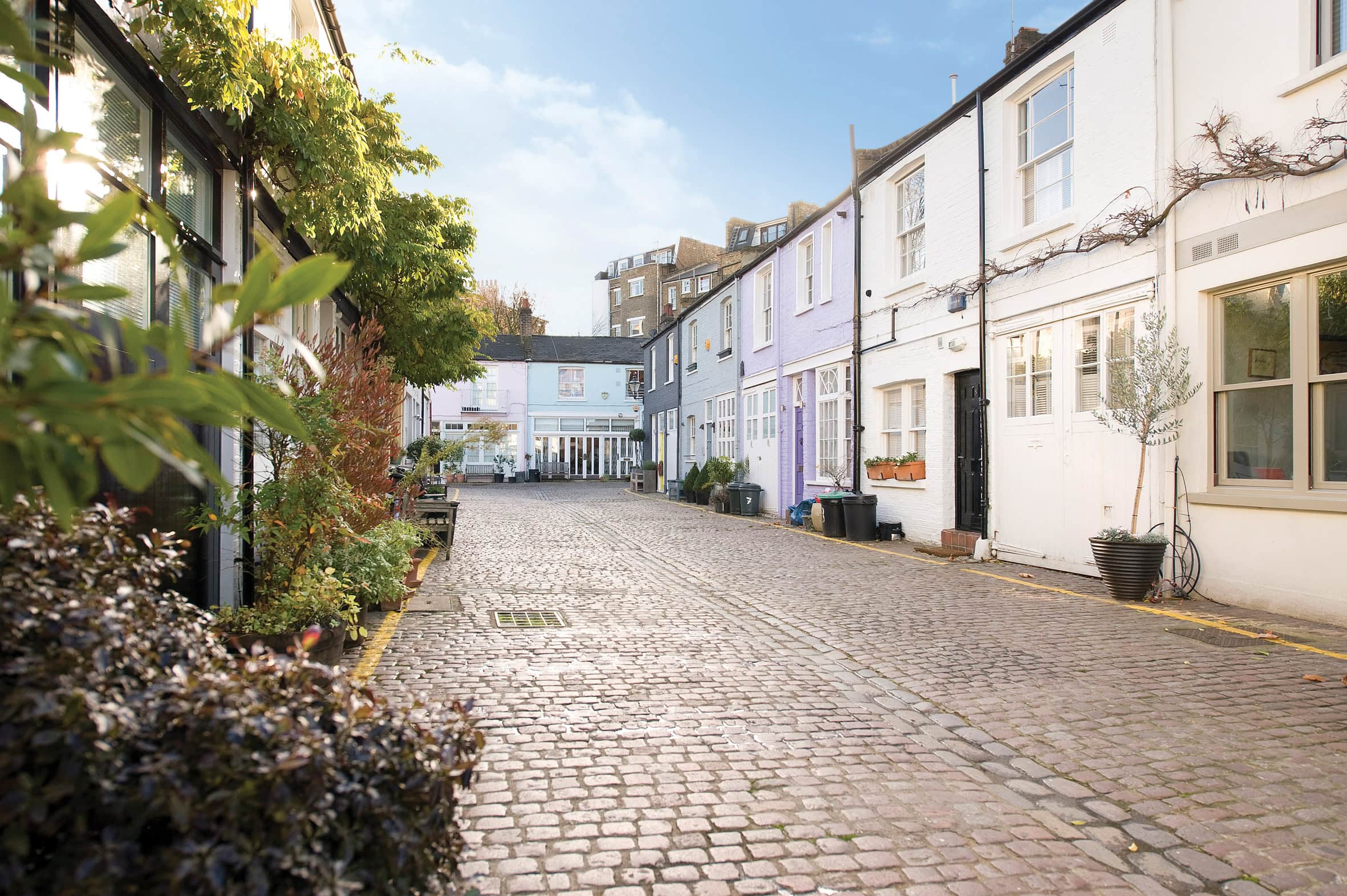
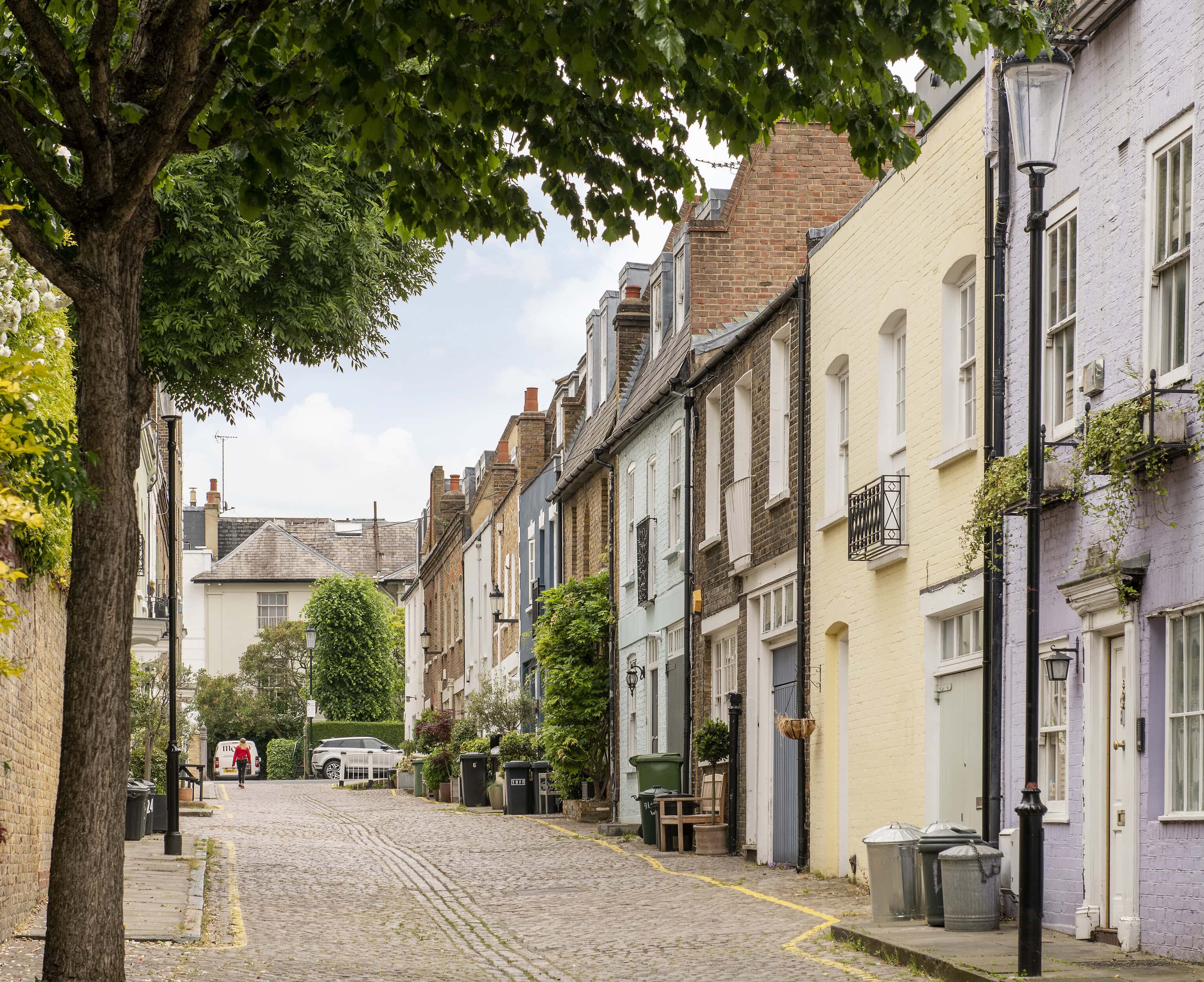
Few London neighbourhoods offer such a distinctive combination of vibrant energy, character, and tranquillity as Notting Hill. Behind its colourful terraces, garden squares and lively streets are some of West London’s most sought-after mews houses – from the famous cobbles of St Luke’s Mews to the quieter corners of Horbury Mews, Ladbroke Walk and Colville Mews.
Horbury Mews
Colville Mews
Horbury Mews
Colville Mews
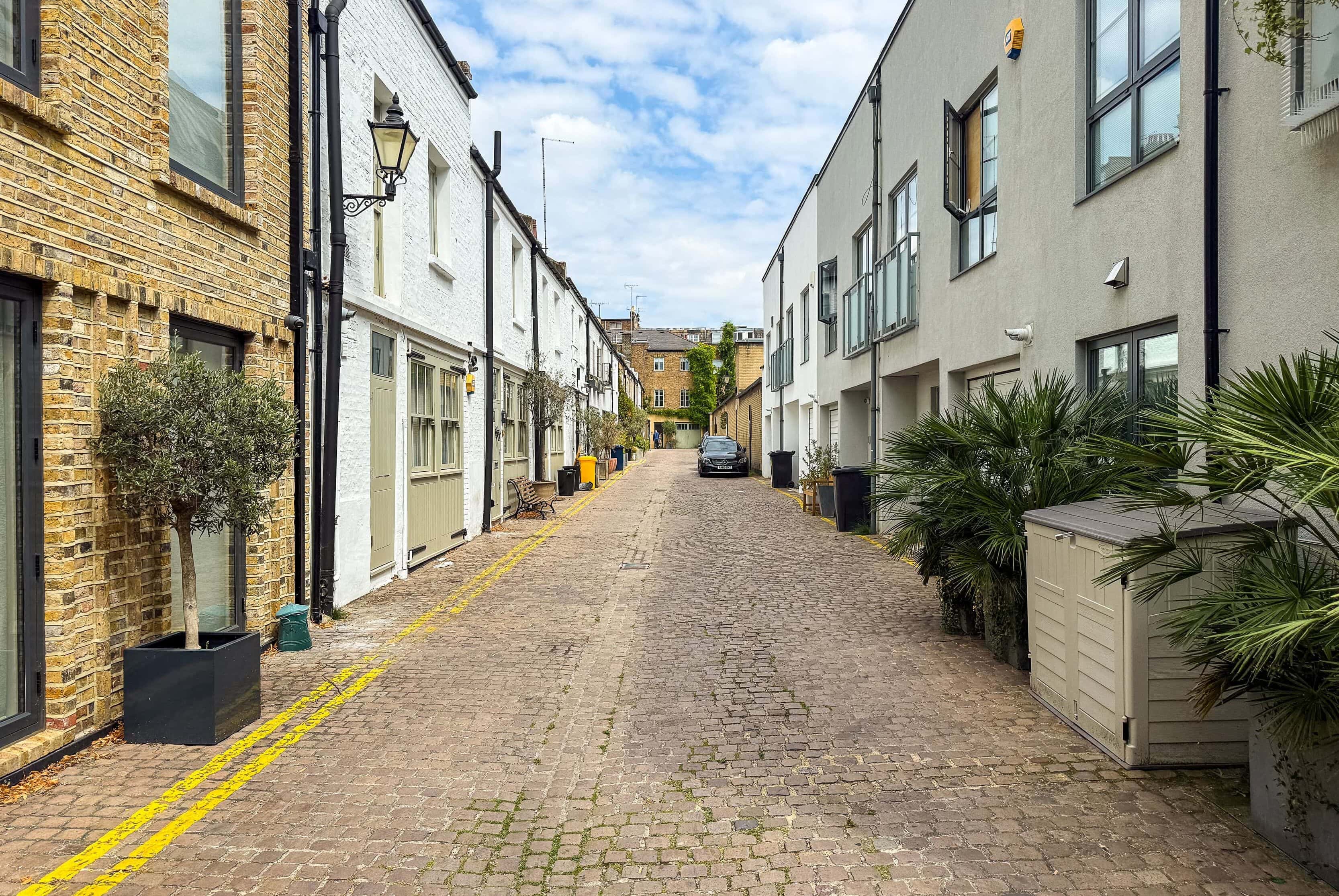
These tucked-away homes offer something increasingly rare in central London: privacy coupled with a genuine sense of community. Neighbours gather on benches outside their front doors, often coming together for summer parties, creating a wonderfully sociable atmosphere. And yet, despite this peaceful, village-like feel, mews streets remain within easy reach of the restaurants, independent shops, cultural attractions and excellent transport links that make Notting Hill so desirable.
For over 54 years, Lurot Brand has specialised in London’s mews properties. Our detailed mews-specific knowledge, combined with longstanding relationships with owners, buyers and agents, gives us a unique understanding of the Notting Hill market.
What makes living in a Notting Hill mews so special?
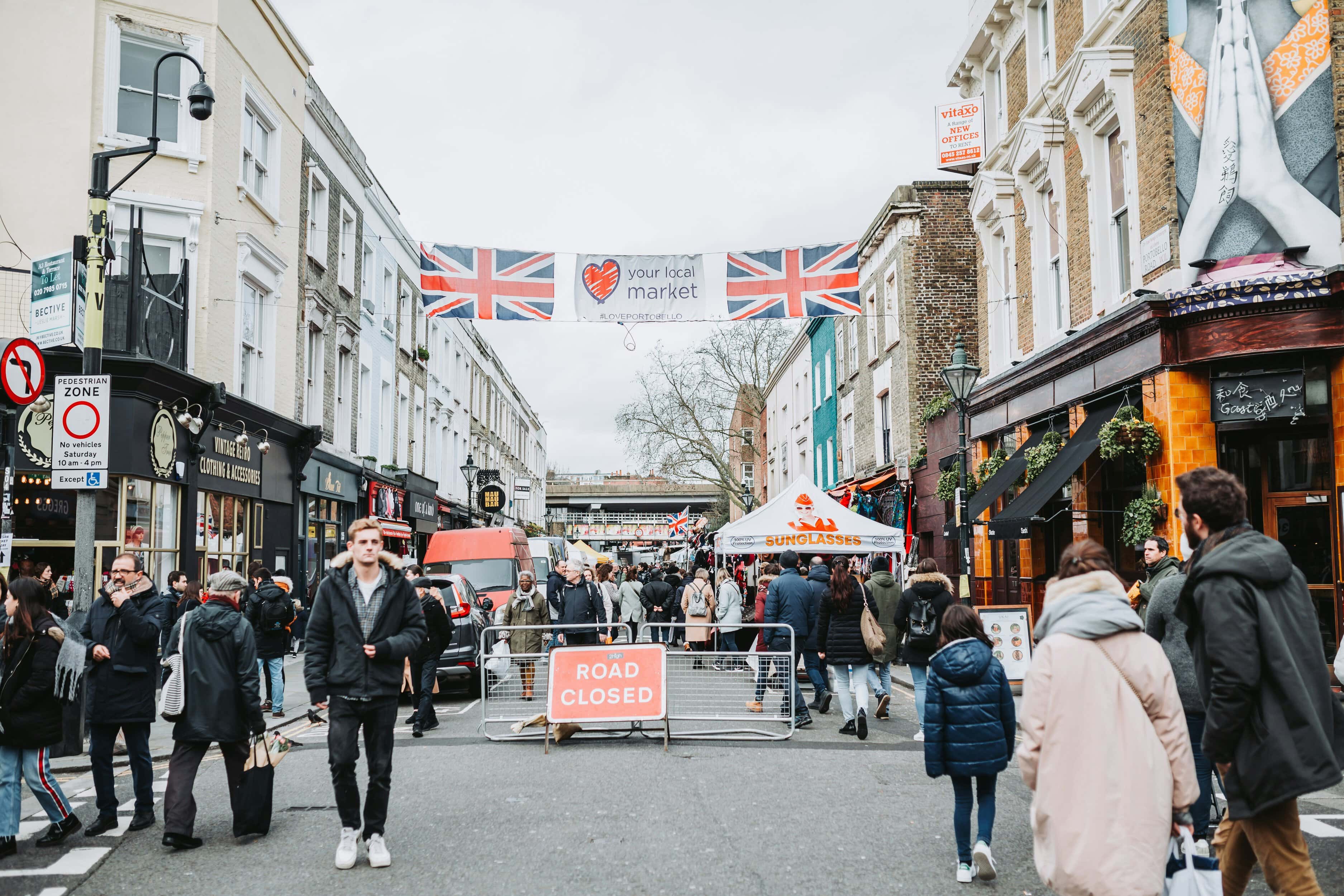
Notting Hill’s appeal lies in its contrasts. Within just a few minutes, you can move from the bustle of Portobello Road Market or the boutiques of Westbourne Grove to a quiet, cobbled mews, where the pace feels slower and the atmosphere distinctly village-like. No two homes are quite the same, each with its own character, history and details, yet there is a strong sense of community that connects them all.
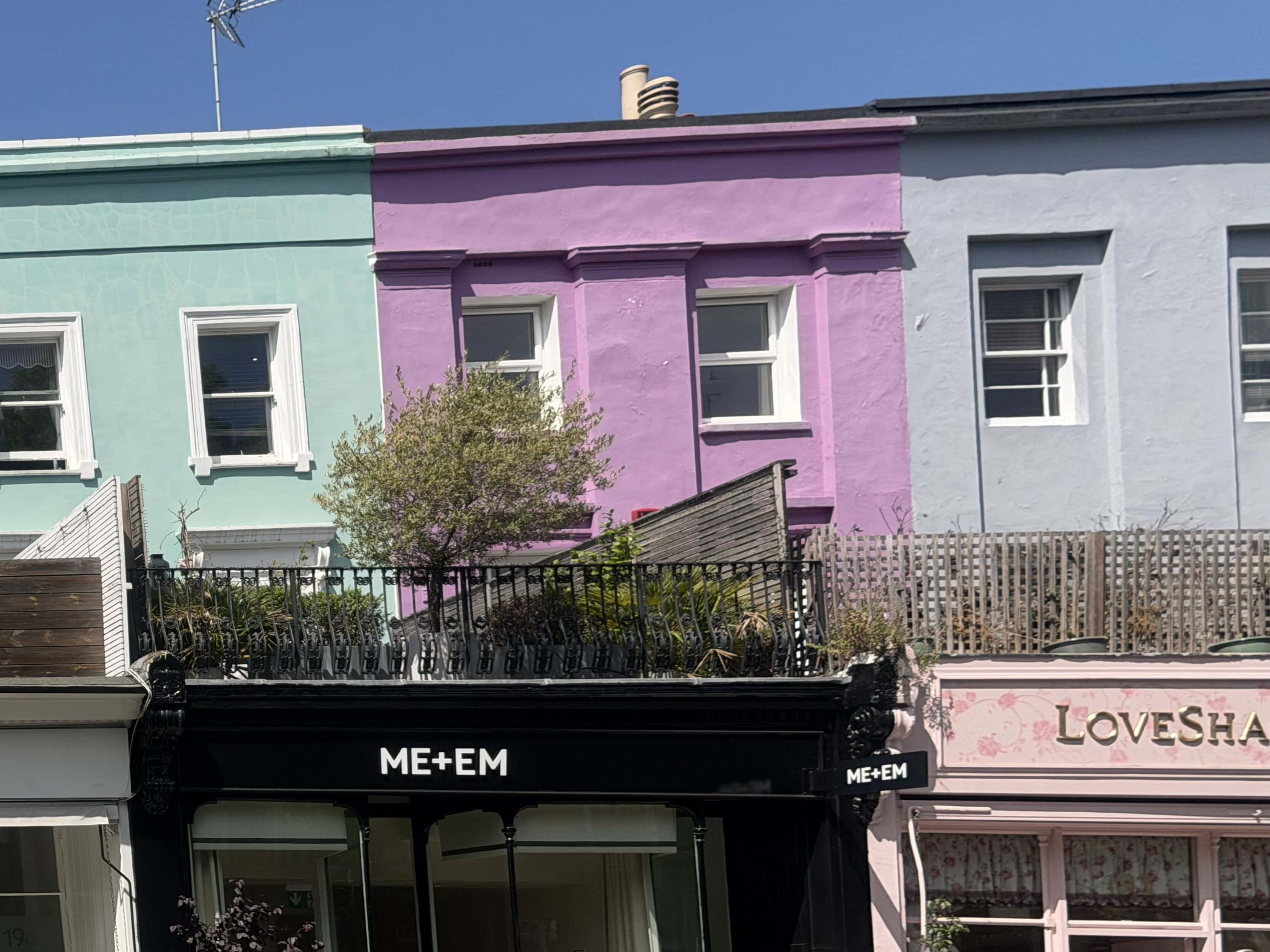
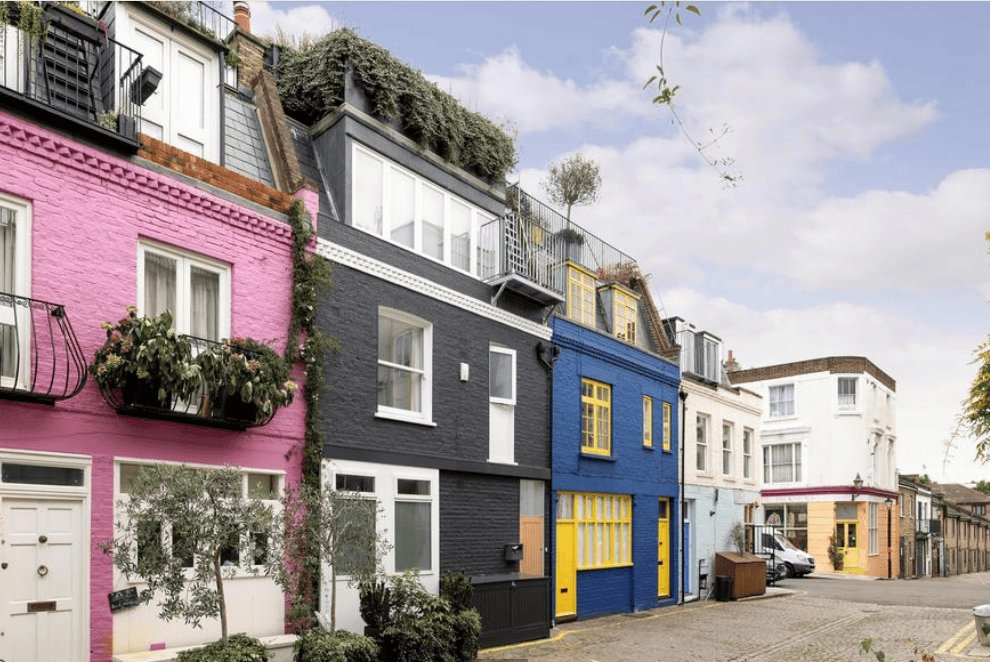
The neighbourhood’s creative spirit, shaped by its Caribbean heritage, artists, musicians and bohemian roots, remains woven into everyday life. Independent shops, galleries, cafés and cultural venues sit alongside some of London’s most characterful streets, while its enduring appeal on screen has only added to its allure. Notting Hill provided the backdrop for films including Notting Hill and Love Actually, with St Luke’s Mews becoming internationally recognisable following its appearance in the latter.
Portobello Road
St Luke’s Mews
Portobello Road
St Luke’s Mews
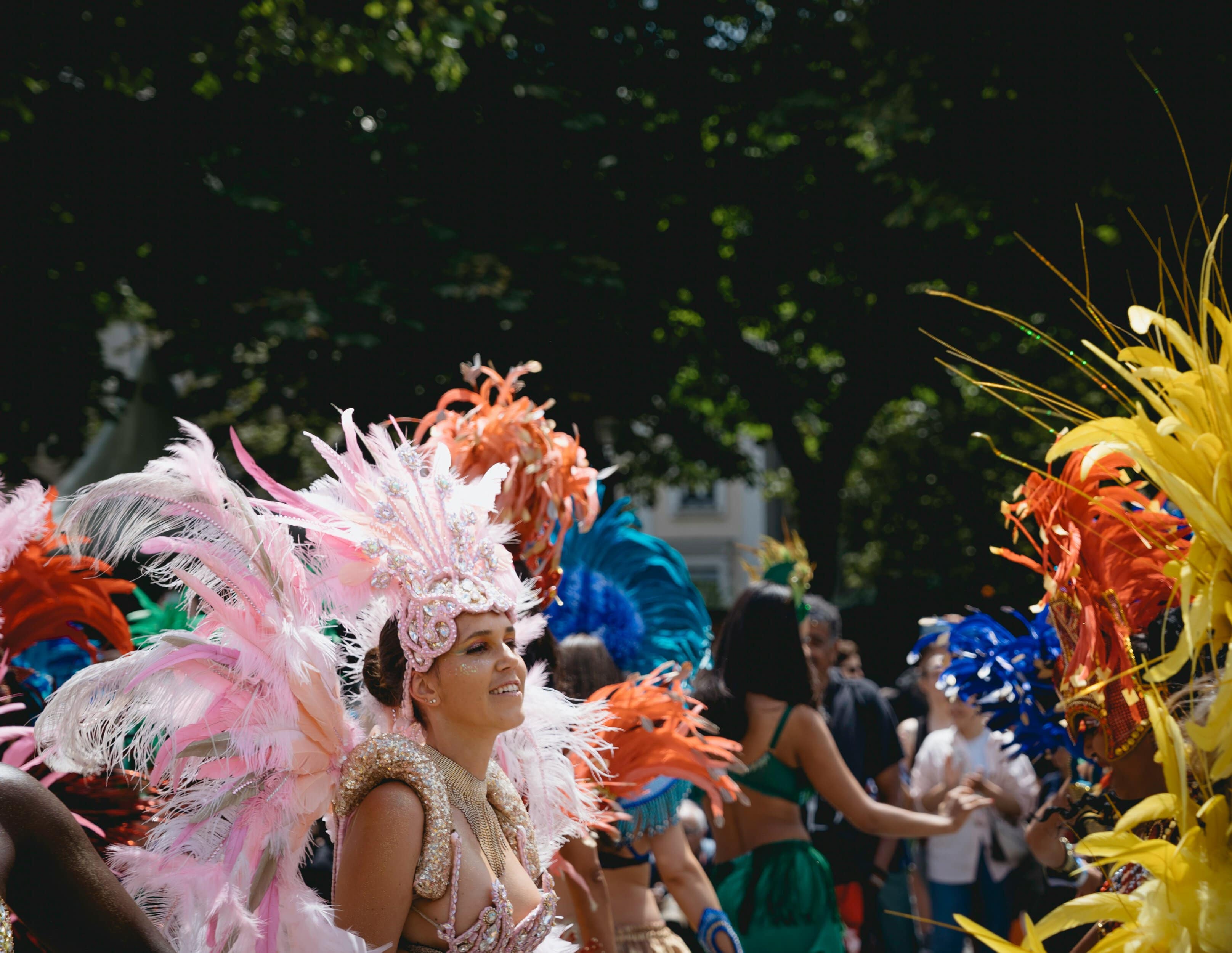
Yet it is this combination of individuality, energy and intimacy that makes the area particularly special. Every August Bank Holiday, Notting Hill comes alive for the world-famous Carnival, while throughout the rest of the year, its restaurants, green spaces and independent businesses offer plenty to explore. For those living on one of its tucked-away mews streets, there is the added pleasure of enjoying all this from a peaceful, close-knit corner of the neighbourhood – where neighbours know one another, homes each have their own identity, and the best of Notting Hill is just moments from your front door.
Discovering some of Notting Hill’s most distinctive mews streets
Mews streets were originally built as stables and coach houses to serve the grand Victorian homes nearby. Tucked away from London’s better-known thoroughfares, many of these characterful streets have since become iconic in their own right, with some even gaining fame on the silver screen. Today, they are home to a mix of residential and commercial properties. Some of Notting Hill’s most well-known mews streets include:
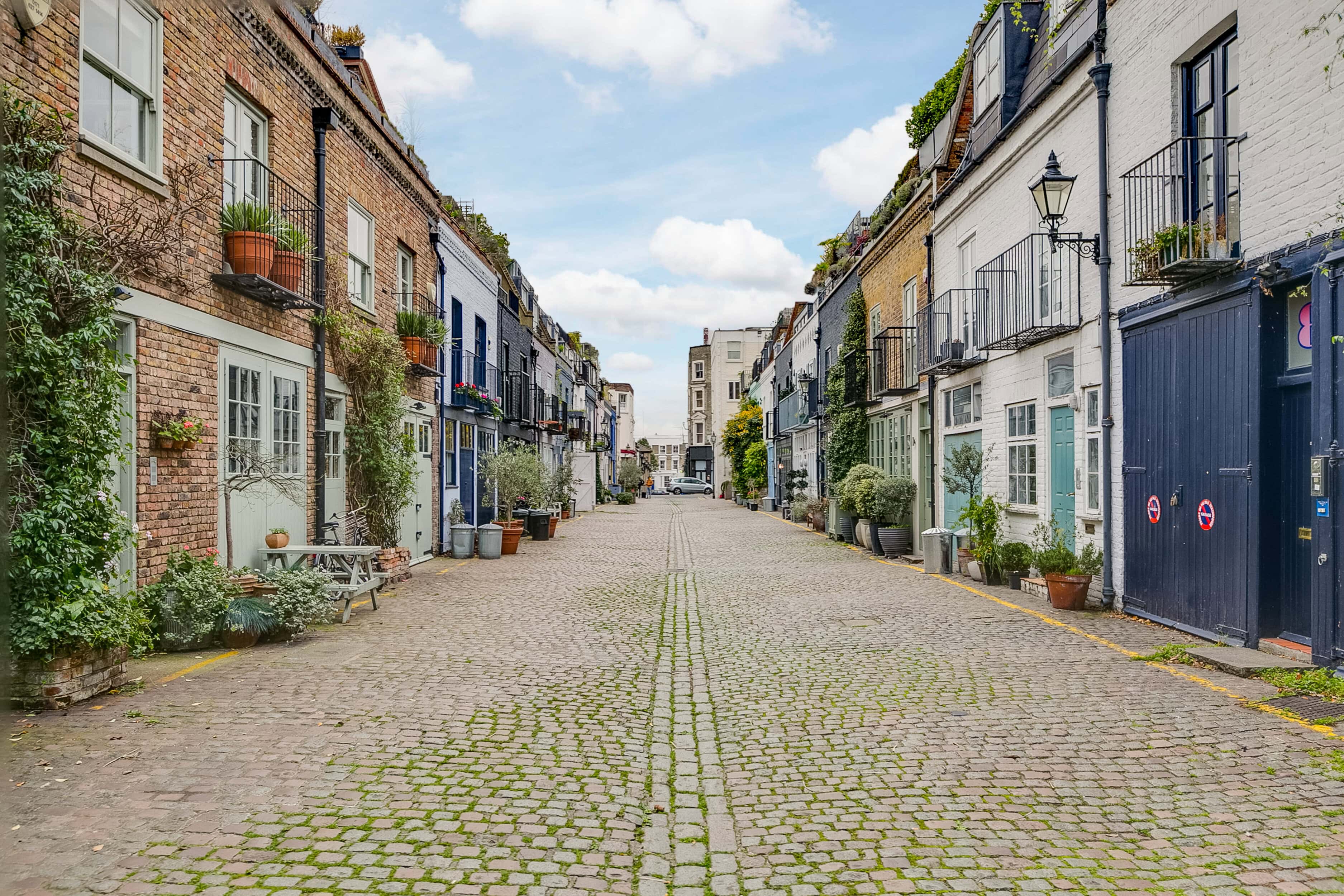
St Luke’s Mews is one of Notting Hill’s most iconic mews streets, known for its Victorian street lamps, wrought iron balconies and brightly painted façades. Its colourful, characterful setting has made it a favourite among film fans and visitors, thanks in large part to its starring role as Keira Knightley’s home in the much-loved 2003 film Love Actually. A quirky sign outside one of the houses even acknowledges the street’s cinematic fame, asking visitors to make a charitable donation when taking photographs. The mews also appeared in The Man Who Knew Too Little, adding another chapter to its film history. Today, it offers an attractive residential atmosphere with a touch of cinematic glamour, making it one of Notting Hill’s most recognisable and sought-after addresses.
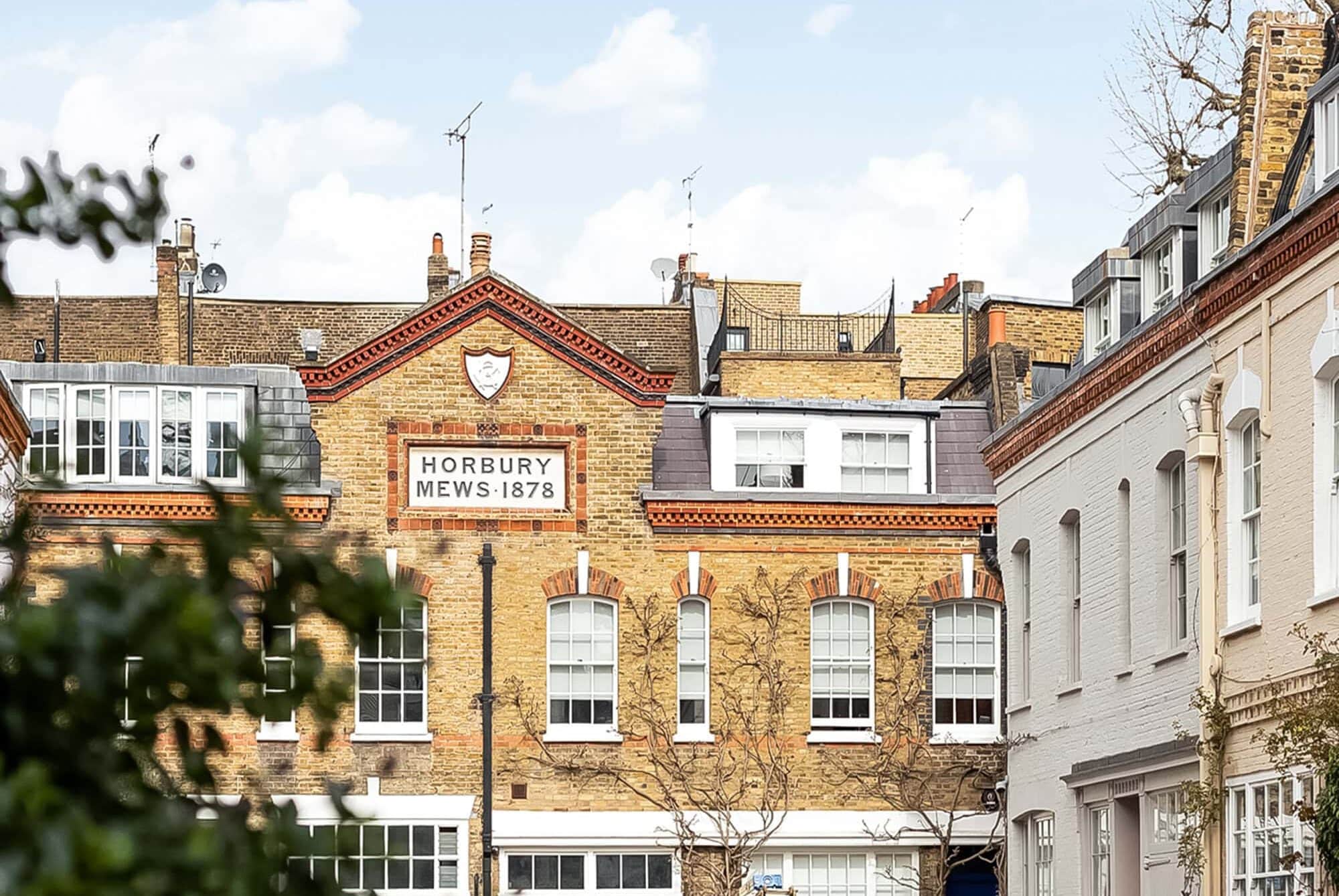
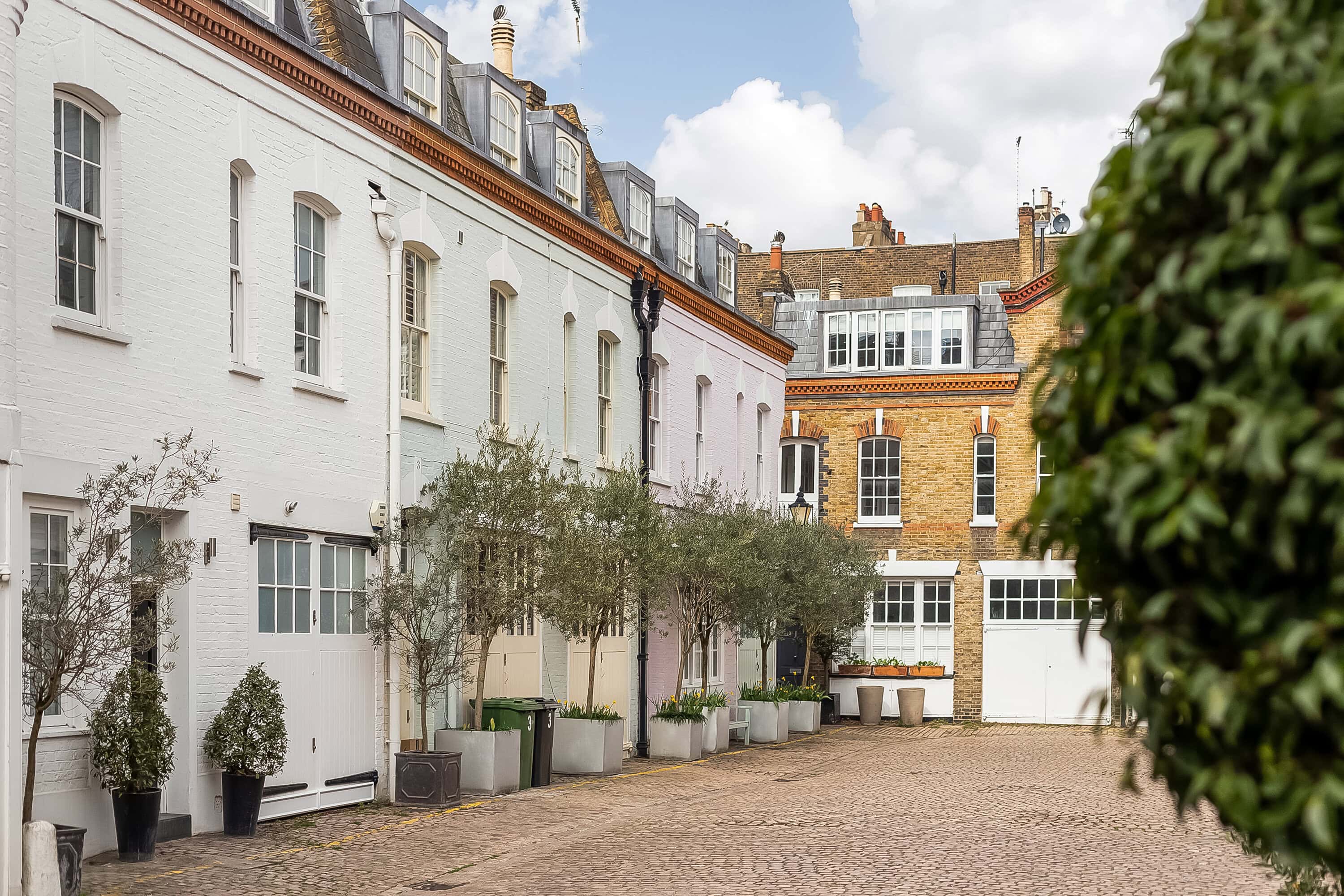
Tucked away just off Ladbroke Road, Horbury Mews is a picturesque, cobbled cul-de-sac offering a peaceful retreat from the bustle of Notting Hill. Its charming Victorian mews houses feature colourful façades, climbing plants and period brickwork, while its location within the Ladbroke Conservation Area helps preserve its historic character. Despite its secluded feel, Horbury Mews is just moments from the boutiques, cafés and restaurants of Westbourne Grove and Notting Hill, with Notting Hill Gate also close by for connections across London.
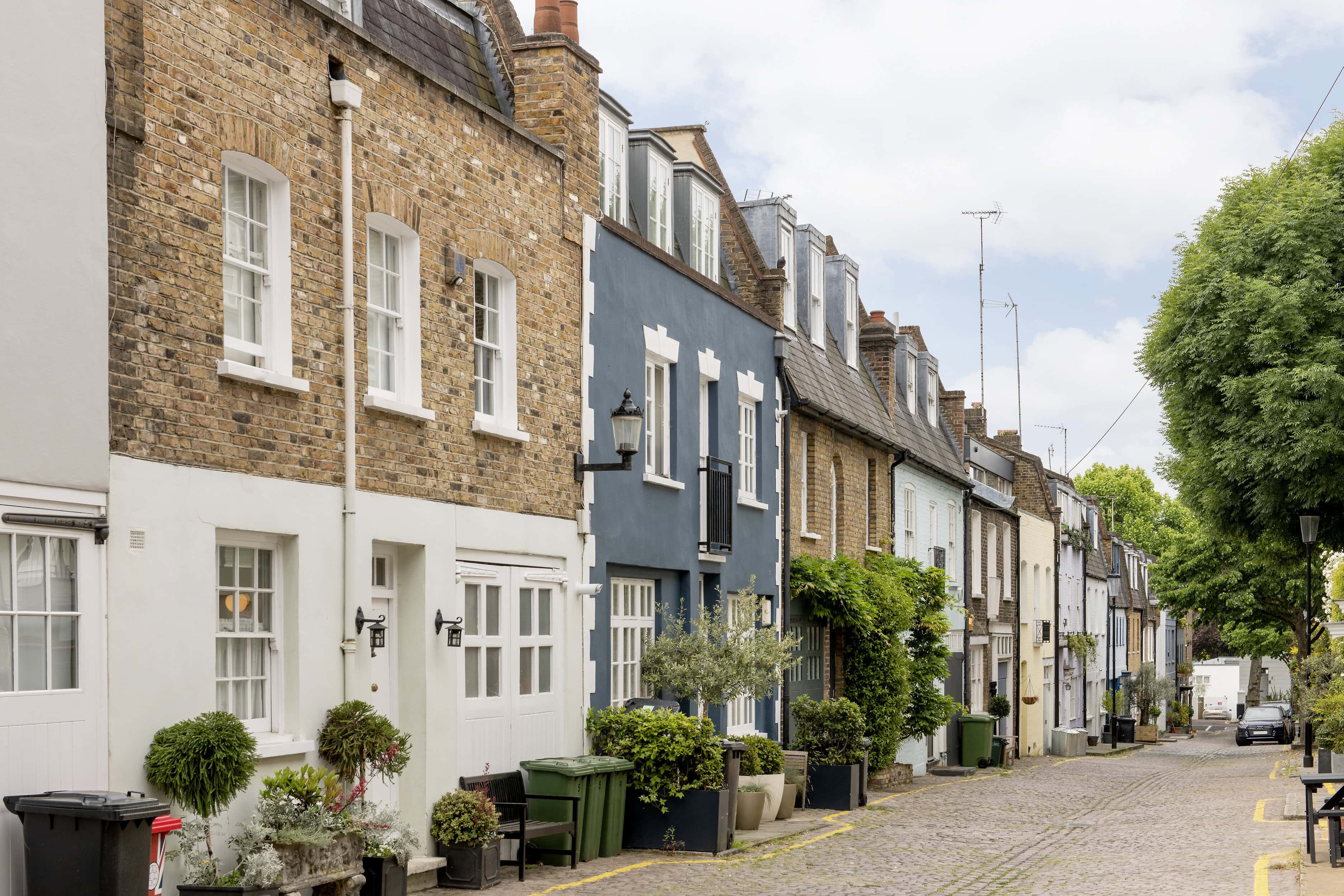
Ladbroke Walk is a historic mews street with a distinctly leafy and residential character. Located between Holland Park and Notting Hill Underground stations, its cobbled road is lined with elegant period properties, mellow brick walls and tree-lined pavements. Originally created as the service mews for the grand residences of Holland Park Avenue, the street dates back to the early development of the Ladbroke Estate in the 1820s. Today, its former stables and service buildings have evolved into individual homes, with several properties notably larger than the traditional mews house and some benefiting from private gardens. Its historic character, green surroundings and proximity to Holland Park, Portobello Road and Westbourne Grove make Ladbroke Walk a particularly desirable corner of Notting Hill.
Tucked behind Lonsdale Road and accessed through its own historic archway, Colville Mews offers a peaceful setting in the heart of Notting Hill. Originally built as the coach houses and stables serving the grand homes of Colville Terrace, the mews offers a lively commercial character, with a selection of businesses adding to its sense of community, including the luxury wellness and lifestyle club Cloud Twelve. The mews has attracted notable creative residents over the years, including fashion designer Alice Temperley, while its enviable position places Westbourne Grove, Portobello Road and some of the neighbourhood’s best boutiques, cafés and restaurants within easy walking distance.
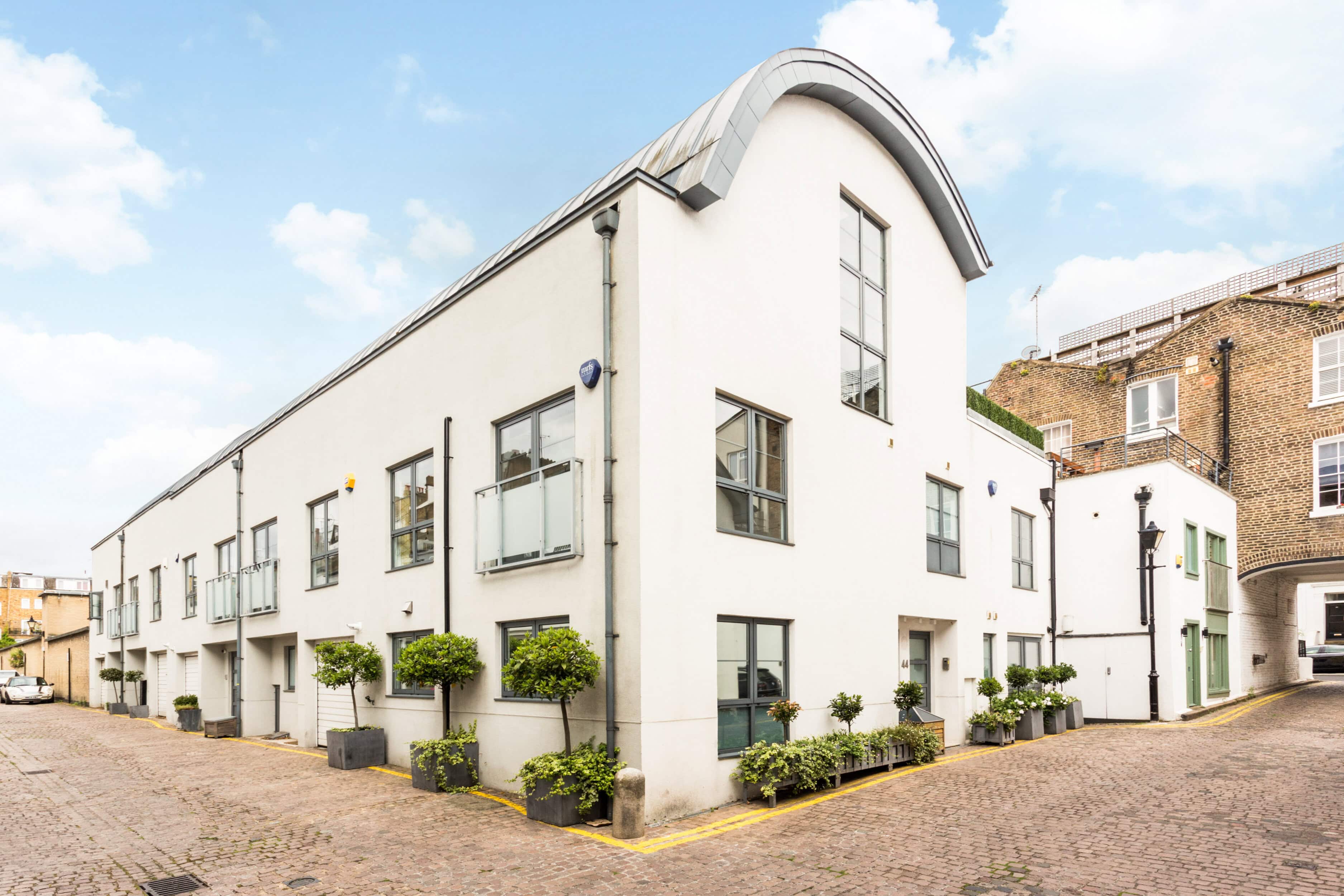
Denbigh Close is a charming, cobbled cul-de-sac just off Portobello Road, whose mews houses were originally built as stables and coach houses for the grand homes of Denbigh Terrace and Chepstow Villas. Formerly known as Denbigh Mews, the street has evolved into an exclusive residential enclave while retaining its historic architecture and peaceful atmosphere. Its location makes it particularly appealing, with the boutiques, cafés, restaurants and market of Portobello Road on the doorstep, while Westbourne Grove, Kensington Gardens and Hyde Park are all within easy reach. Denbigh Close also has its own place in film history, having featured in the classic 1969 film The Italian Job.
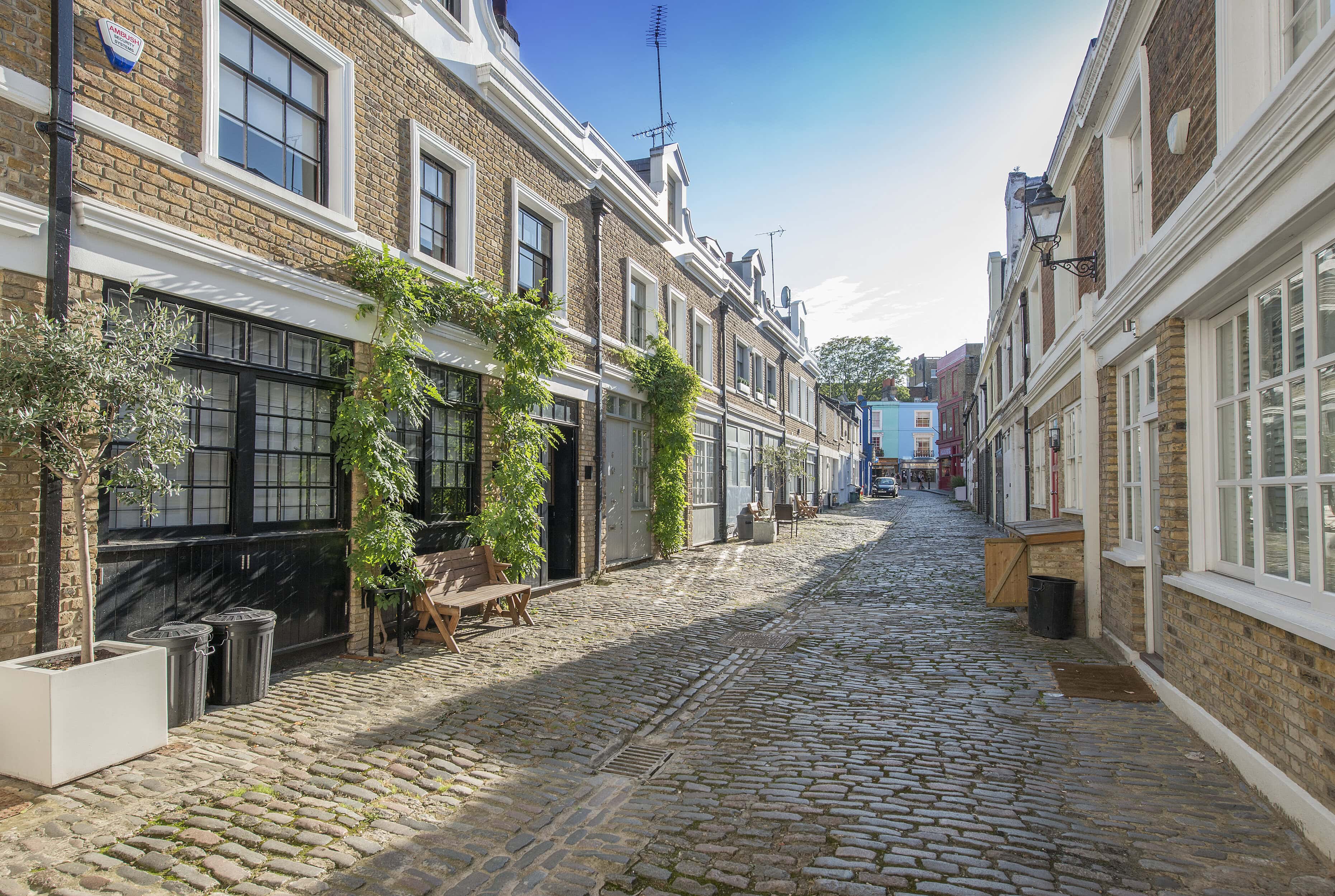
Codrington Mews is a peaceful, L-shaped cobbled cul-de-sac accessed from Blenheim Crescent, between Ladbroke Grove and Portobello Road, characterised by period houses, colourful façades and a quiet atmosphere. Its entrance has a distinctly creative character: it is home to the headquarters of XL Recordings, with striking artwork celebrating artists including The XX and Thom Yorke displayed on the exterior. This connection to one of the UK’s leading independent record labels adds a distinctive cultural touch to an otherwise tranquil residential setting.
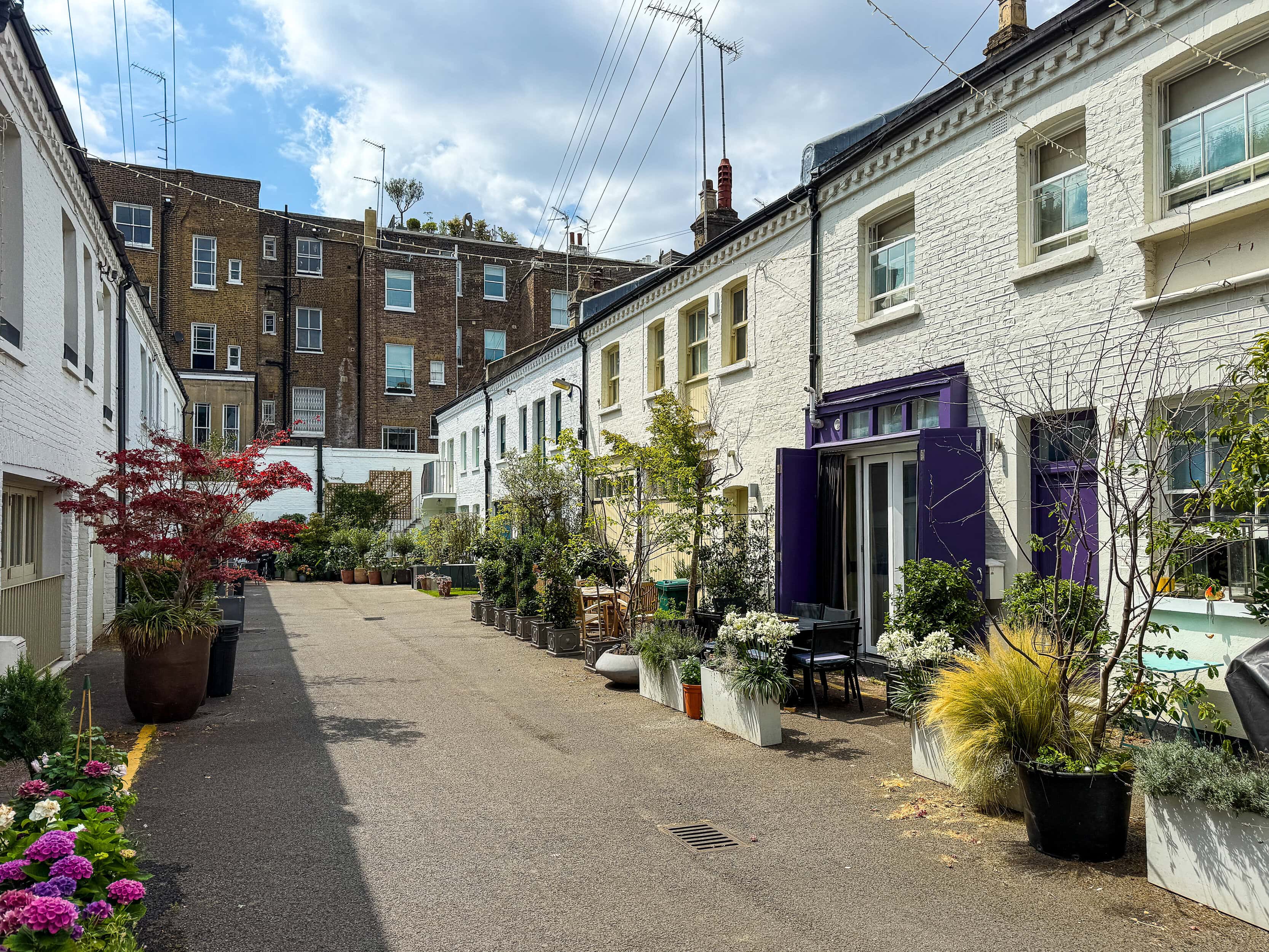
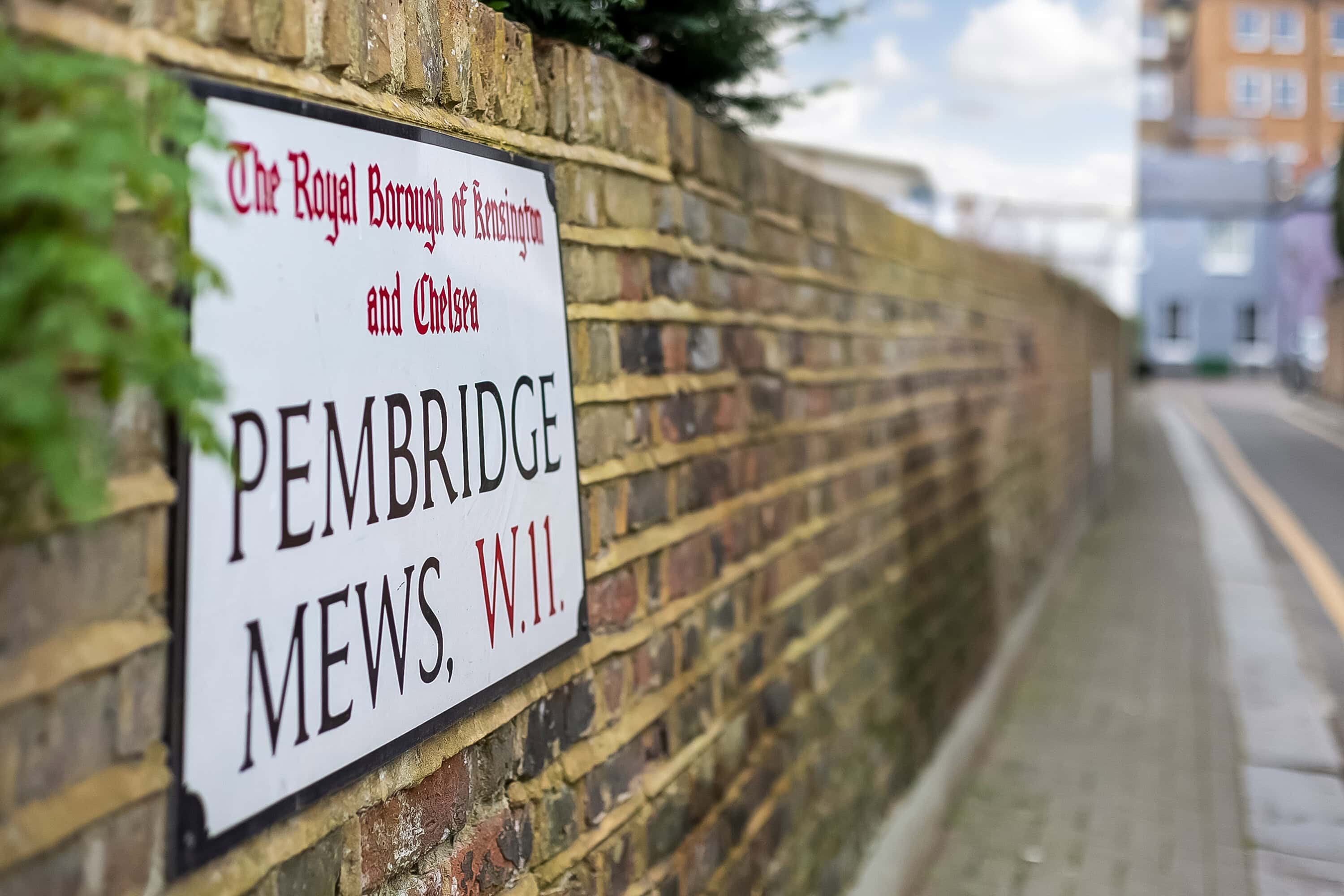
Tucked between Pembridge Crescent and Chepstow Crescent, Pembridge Mews is a highly sought-after cobbled cul-de-sac with a particularly secluded atmosphere. Its colourful, cottage-style properties and intimate layout give the street a distinctive character, while its cul-de-sac setting creates a sense of privacy that belies its central location. Westbourne Grove and Portobello Road are within easy walking distance, as are Notting Hill Gate, Kensington Gardens and Hyde Park.
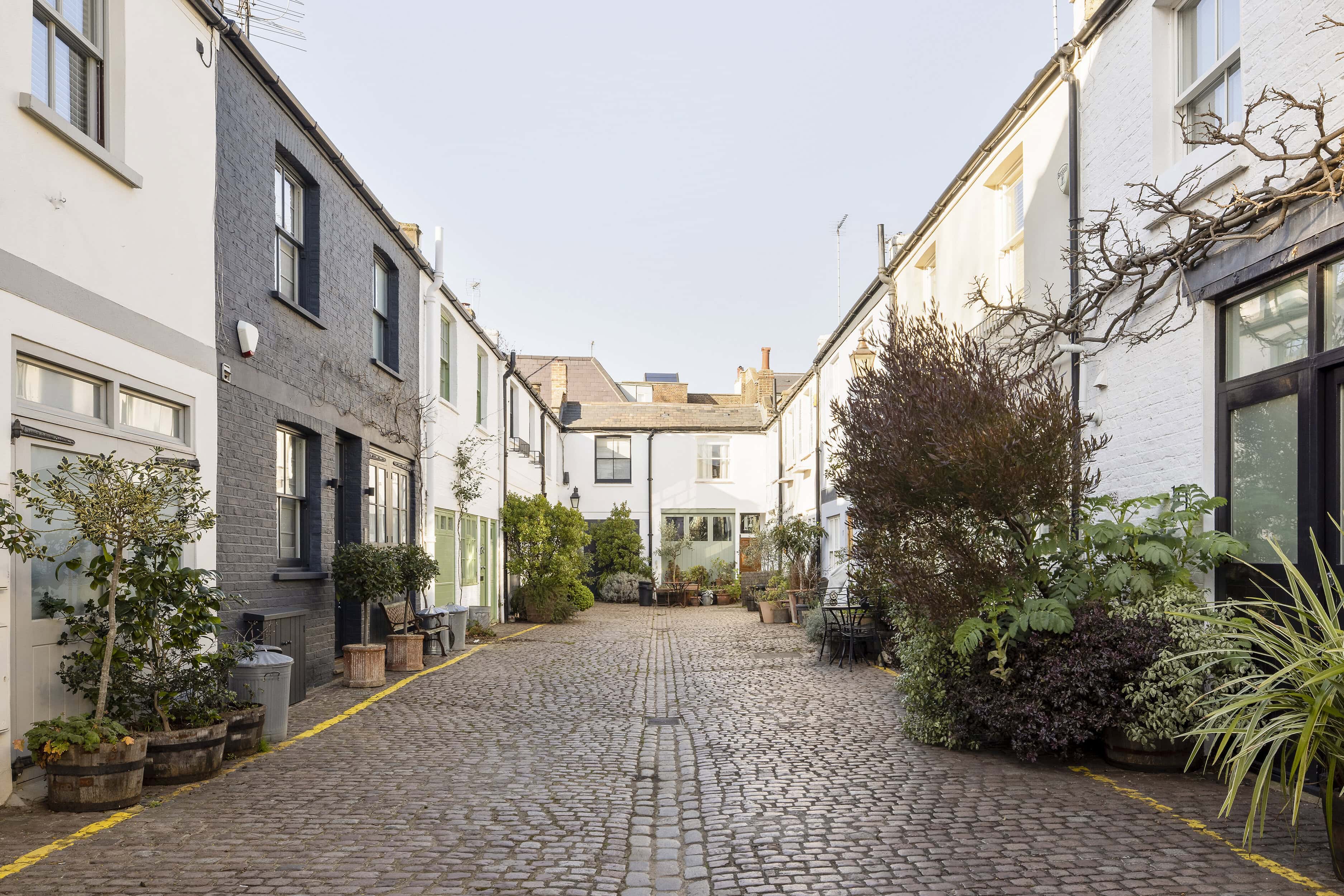
Together, these streets demonstrate the variety of mews living available in Notting Hill, from compact cottages to larger houses with garages, terraces and individual layouts.
Notting Hill beyond the front door
One of the great advantages of living in a Notting Hill mews is the lifestyle on the doorstep. Portobello Road is famous for its market, antiques and independent shops, while Golborne Road offers a more local atmosphere, with vintage shops, bakeries and international food. Westbourne Grove is home to stylish boutiques, cafés and restaurants, while Hillgate Village is known for its pastel-coloured houses and leafy gardens.
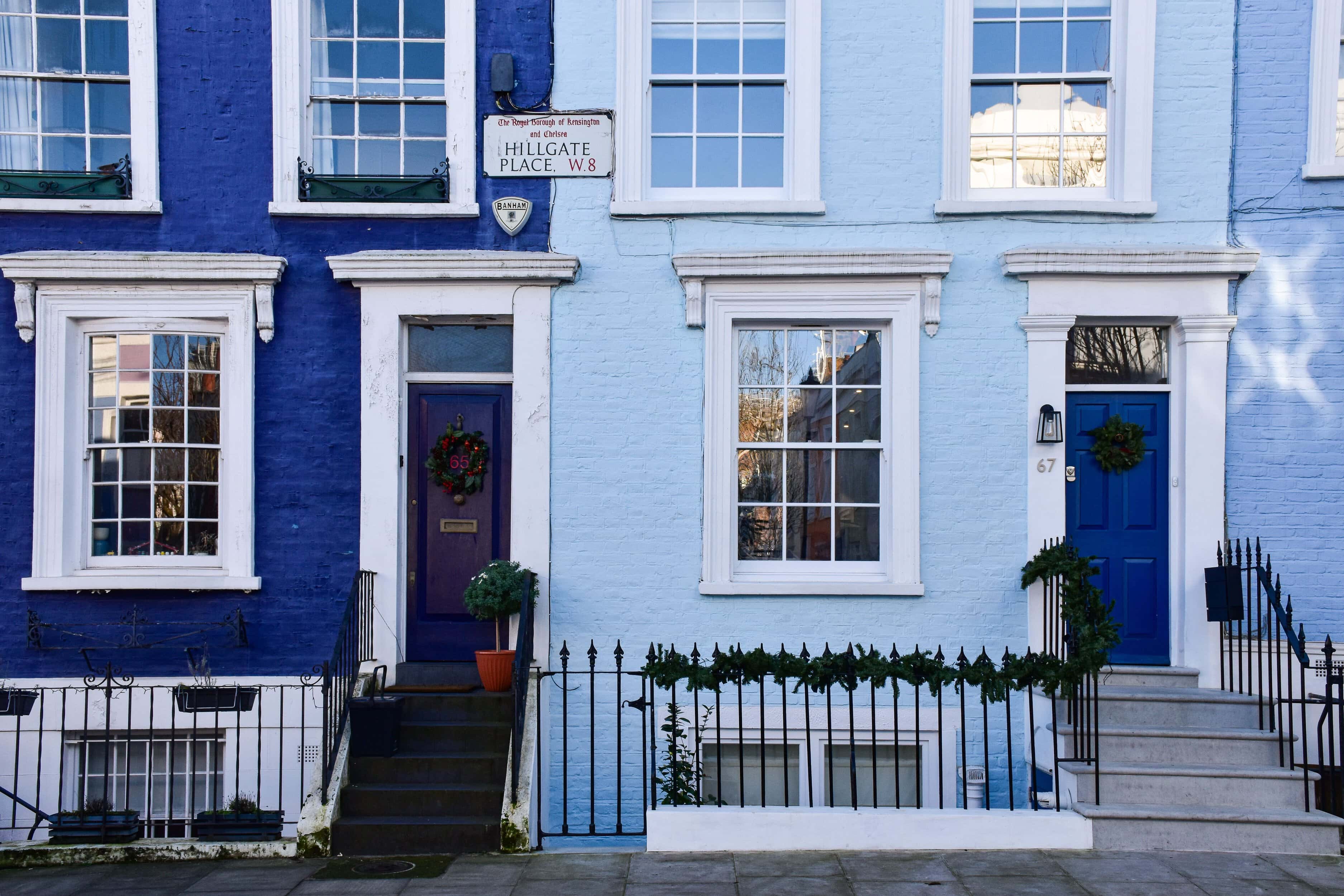
The neighbourhood also has a thriving independent coffee culture, with cafés and coffee shops dotted throughout its streets, alongside a growing gallery scene showcasing contemporary art and emerging artists. There is plenty to do beyond shopping and dining, too, from catching a film at the Gate Picturehouse to exploring the Museum of Brands or browsing the independent galleries around Portobello Road. With Holland Park and Kensington Gardens close by, there is no shortage of green space either – adding to the sense that, despite its central London location, Notting Hill offers a lifestyle with a distinctly village-like rhythm.
The food scene is another of Notting Hill’s great attractions, ranging from world-class fine dining to buzzy neighbourhood favourites. The Ledbury and Core by Clare Smyth both hold three Michelin stars. At The Ledbury, seasonal British ingredients take centre stage, alongside an acclaimed wine cellar, while Core by Clare Smyth focuses on exceptional British produce from sustainable farmers and producers, with its elegant setting and Chef’s Table adding to the experience.

For a more relaxed meal, Dorian on Talbot Road has become one of the neighbourhood’s most sought-after tables, combining a laid-back bistro atmosphere with exceptional cooking. Its menu changes daily, while an extensive wine list focuses on Burgundy, Champagne and independent producers. Canteen on Portobello Road offers a cosier, more informal experience, with its walk-in Italian-inspired restaurant and famously indulgent chocolate mousse.
At the top of Golborne Road, The Fat Badger combines a pub and restaurant with views towards Portobello Road. Its intimate dining room serves seasonal, chef-led menus using produce from the group’s Cotswolds market garden and Lake District farms, while the pub hosts live music throughout the week. Meanwhile, Dove, from chef Jackson Boxer, offers elevated comfort food centred around seasonal British ingredients.
Buying and selling mews houses with a mews specialist
Buying or selling a mews house is different from dealing with a conventional London property. Every home has its own history, layout and character, while factors such as access, parking, outdoor space and planning can have a significant impact on its appeal and value.
Lurot Brand has over five decades of mews-specific records and data, providing an unusually deep understanding of this specialist market. We deliberately operate as a low-volume, high-quality agency, allowing us to offer a tailored and discreet service to both buyers and sellers.
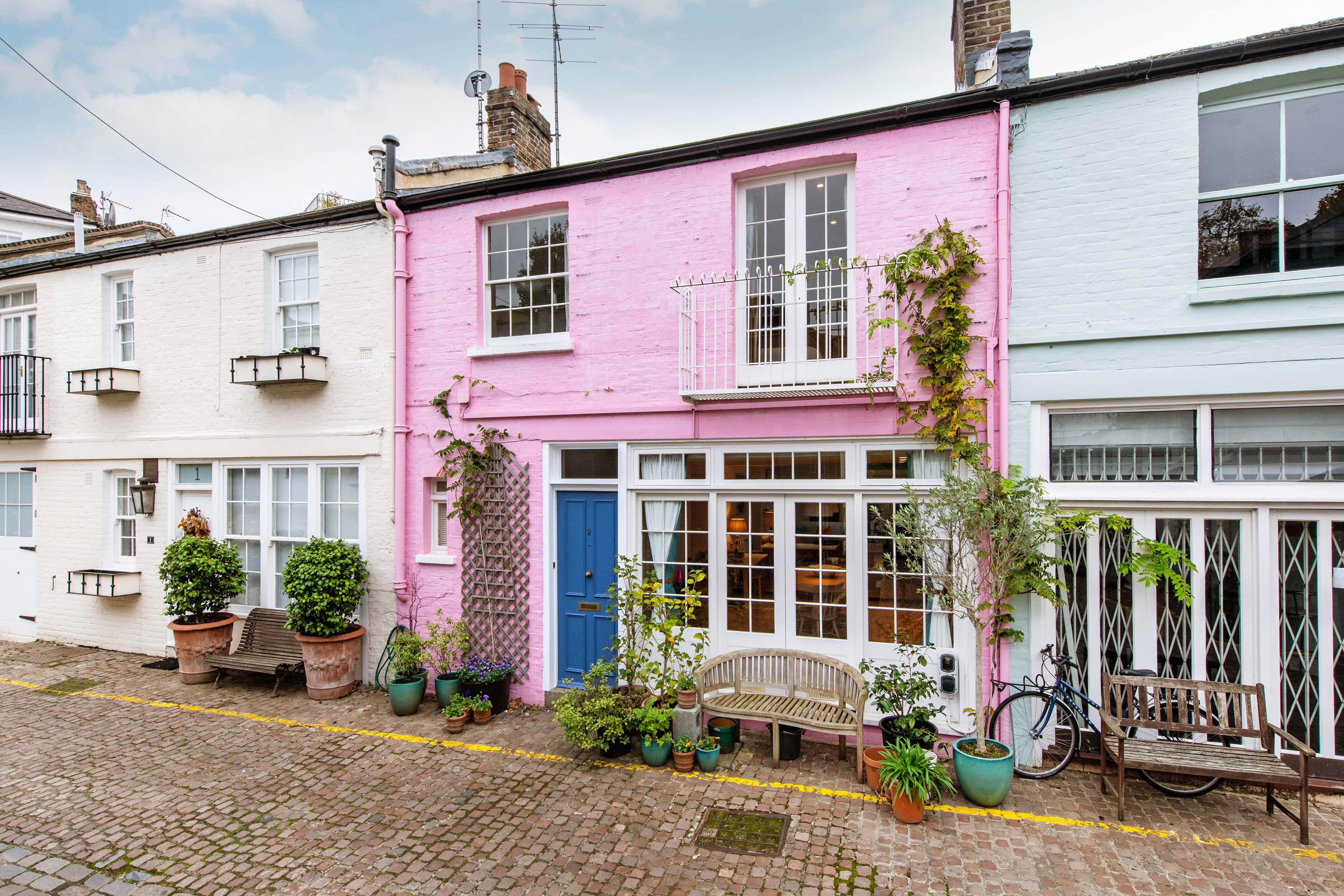
‘We are passionate about mews, and we like to think this comes across in all our viewings.’
For buyers, we curate properties around individual requirements and have access to off-market opportunities, alongside an extensive collection of mews homes across London. For sellers, our specialist network connects properties with a substantial pool of active mews buyers, as well as existing owners, private offices and agents across the capital.
Our reach is also international, reflecting the enduring appeal of London’s mews houses to overseas buyers seeking character, privacy and a central location. Most importantly, we understand mews living. Decades of working with owners and residents have given us a genuine appreciation of the qualities that make these homes so distinctive.
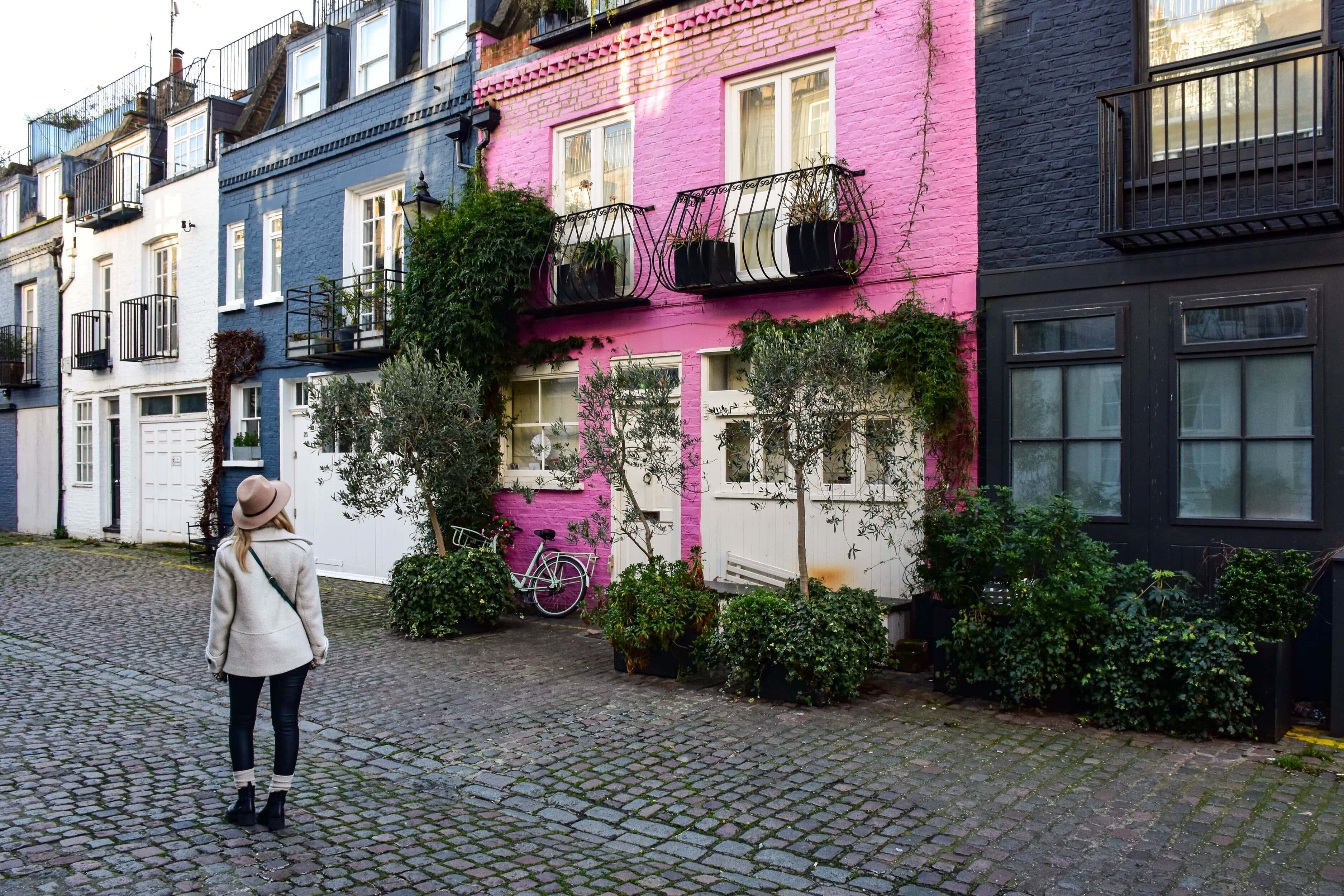
Are you buying or selling a mews house in Notting Hill?
A mews house offers a way of living unlike almost any other type of London property: character and history, privacy and community, all within one of the capital’s most vibrant neighbourhoods. Whether you are looking to buy your first mews, move to another or sell a property you have owned for years, working with a specialist can make all the difference.
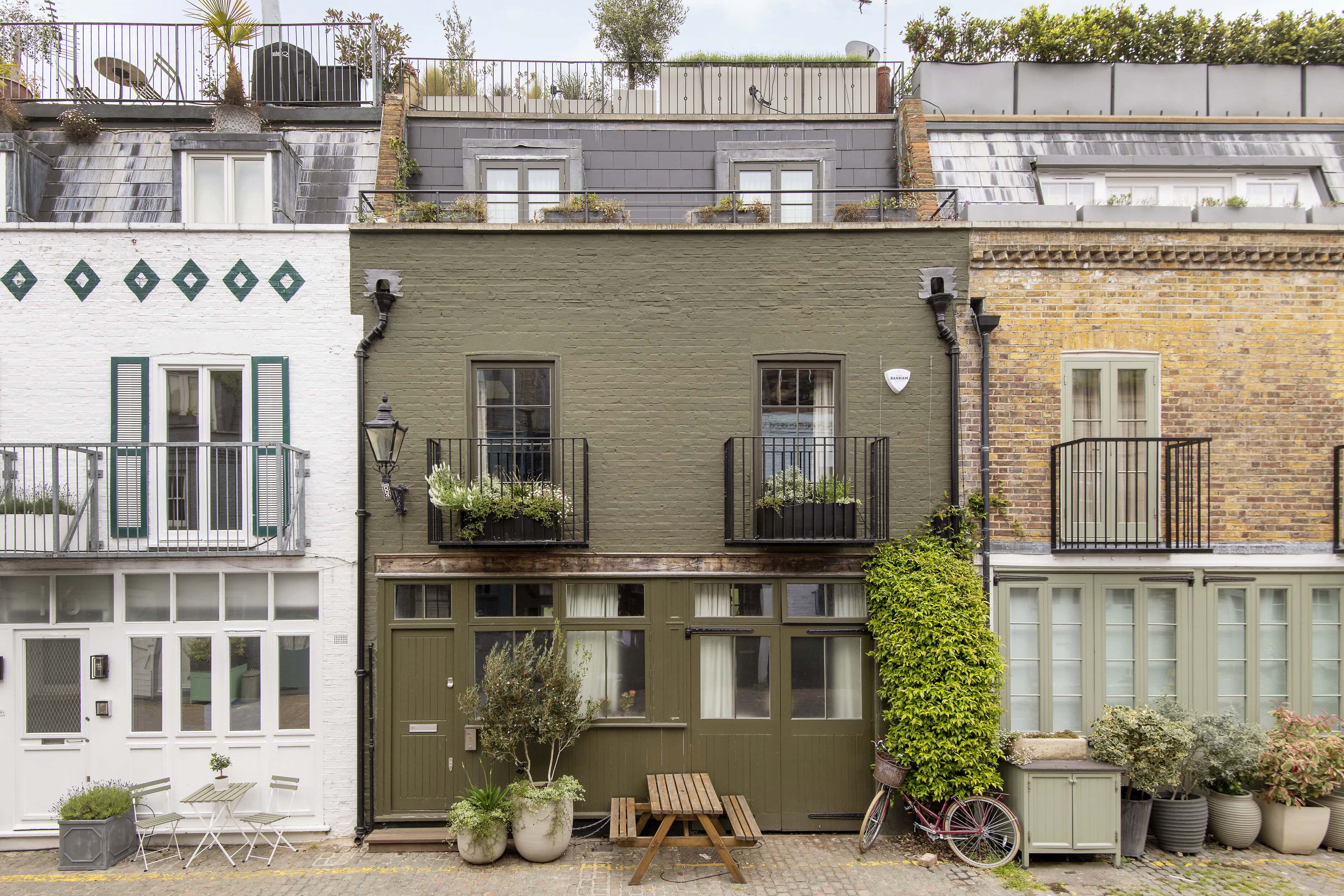
At Lurot Brand, we have a deep understanding of London’s mews properties and the people who buy and sell them. If you’re considering a move, contact sales@lurotbrand.co.uk to speak with our expert team and find out how we can help.
Subscribe To Our Monthly Mewsletter
