Where to find 12 of London’s best mews streets: South Kensington & Notting Hill
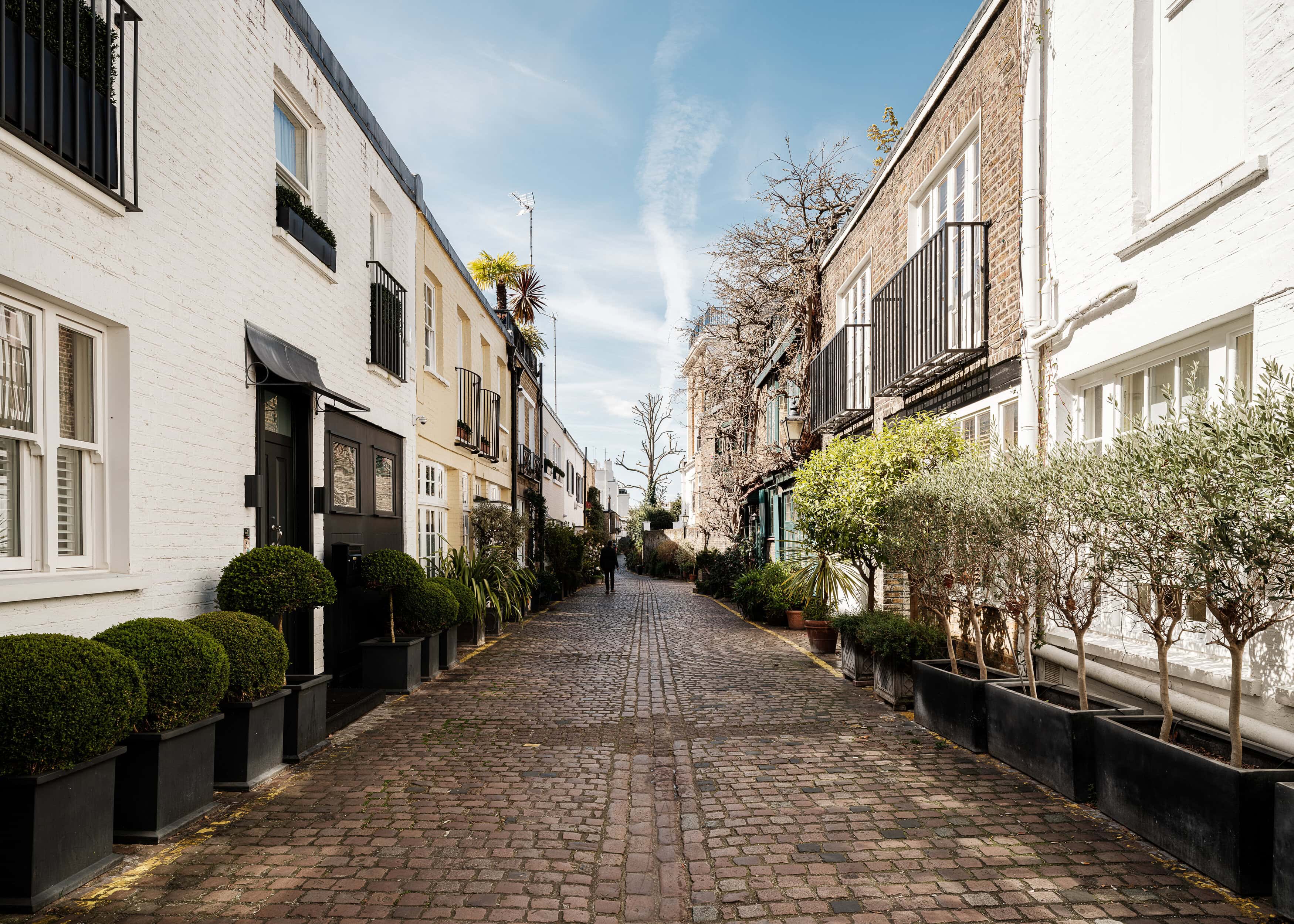
The city is brimming over with narrow side streets and hidden no-through roads that are home to some of London’s best mews streets, traditional and picturesque. These are best appreciated on a sunny day, where you can take a gentle walk that not only leads you through flower-festooned cobbled mews, but gives a fascinating opportunity to appreciate the mews’ character, charm and atmosphere. So where do you find London’s best mews streets? Be prepared to discover places you never knew existed that feel far removed from the city’s urban bustle.
London’s best mews streets
If you want an uninterrupted, relaxing, and thoroughly enjoyable look at some of London’s best mews streets and to sample first-hand what the neighbourhoods have to offer, there’s no better way to see them than on foot. Walking through a peaceful mews makes you feel like you’re in a country village – the scent of lavender and jasmine, the burnished cobblestones that carry the marks of horses’ hooves and carriages from centuries gone by.
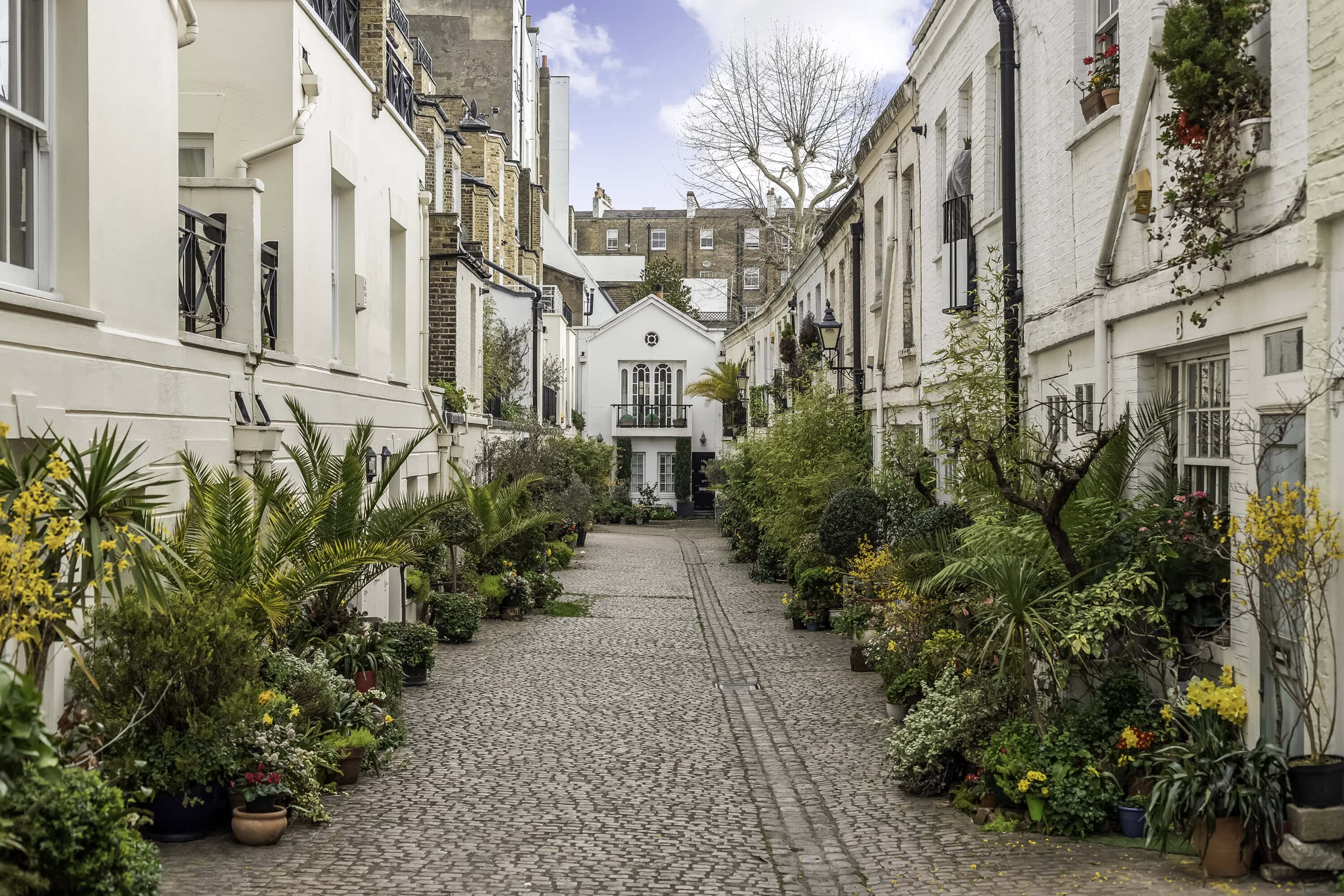
Mews streets in South Kensington
Certain prime postcodes across the metropolis boast more of London’s best mews streets than others, starting with South Kensington and Notting Hill. A good place to start is South Kensington tube station. From here, walk northwards for six minutes, up Exhibition Road and pass the Natural History Museum, until Exhibition Road meets Imperial College Road. If you turn right, you will find yourself in Princes Gate Mews.
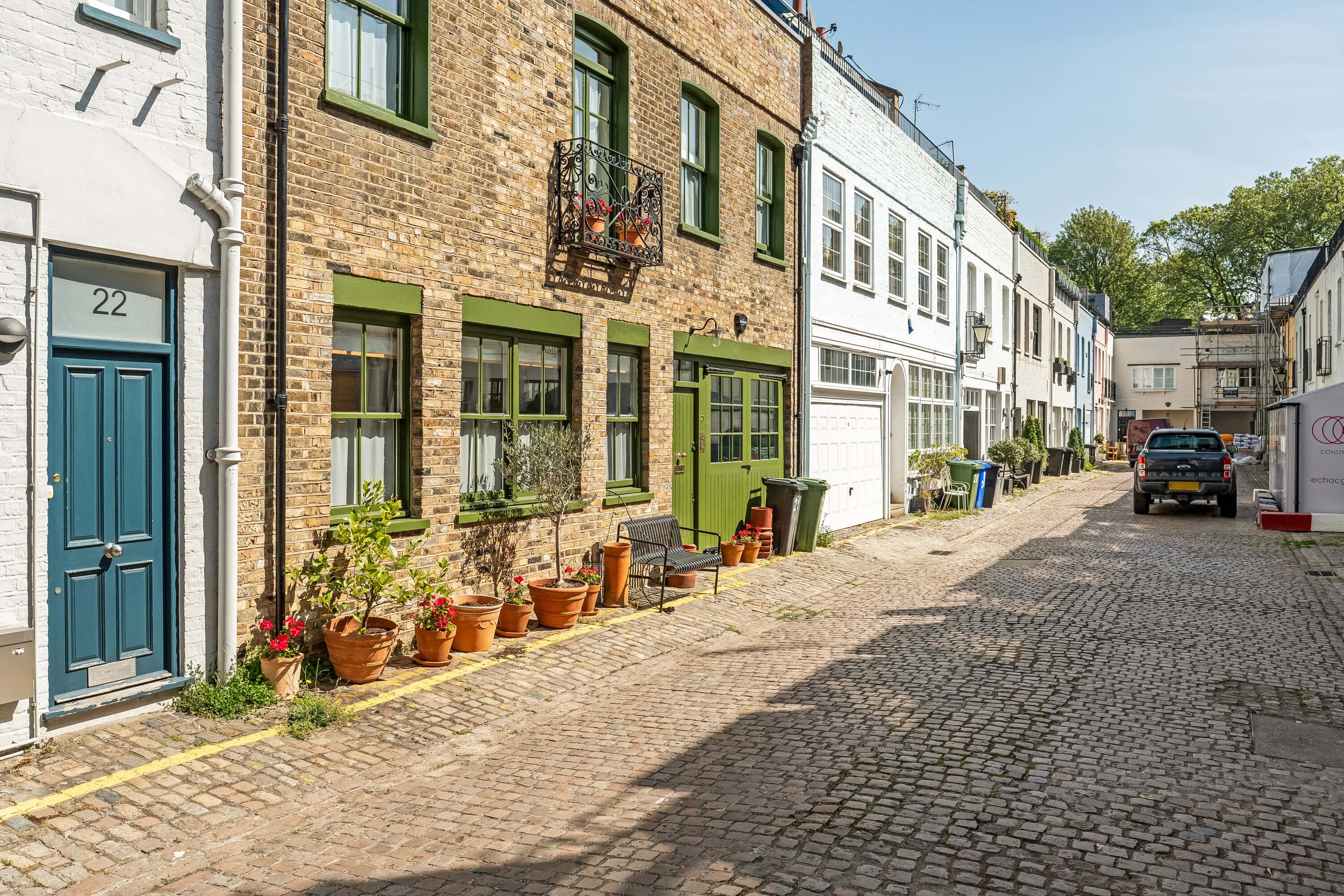
Princes Gate Mews, SW7
The three pretty cobblestone streets that make up this mews are a perfect example of the individuality that London’s best mews streets reveal. Neat rows of pastel-painted houses, summer blooms in pots, and scented climbers running up and over front doors sit in peace and quiet. It’s hard to believe that Harrods, Hyde Park, the V&A and Science Museums are no more than 14 minutes’ walking distance. One claim to fame for Princes Gate Mews is that one of the houses at the end of the mews was used as the main character Harry Hart’s safehouse and tailor shop in the 2014 film Kingsman, played by Colin Firth.
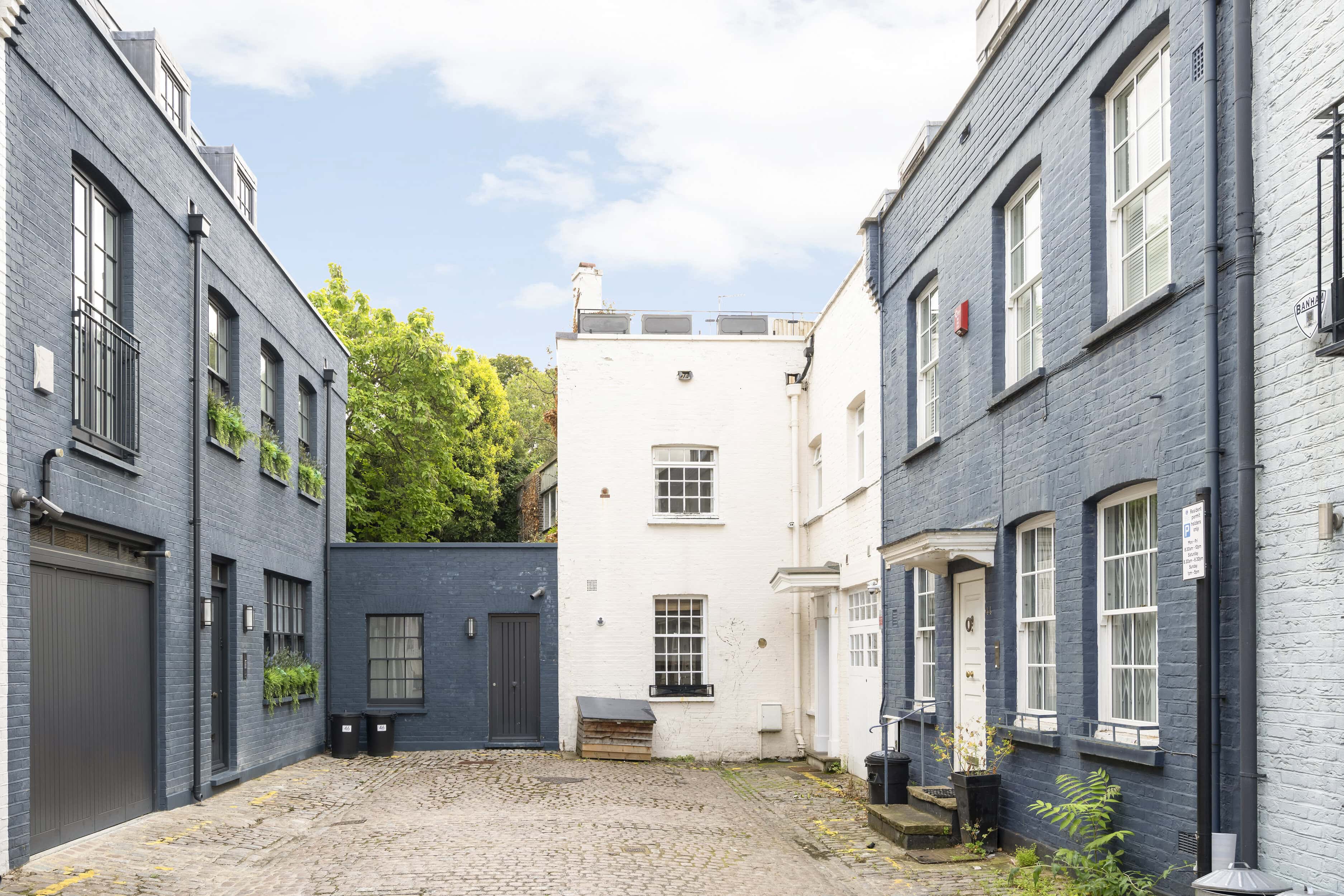
Head back onto the main road, retrace your steps on Exhibition Road and keep walking west, zig-zagging along Cromwell Road, passing the museums. Take a right turn after the traffic lights and you will arrive at our next stop: Queen’s Gate Place Mews.
Queen’s Gate Place Mews, SW7
This regal sounding mews street is full of surprises, home to the car dealership Fiskens at Number 14, who stock ‘the finest historic automobiles’ This classic car showroom is renowned not only across London, but also internationally. You can find further information about Fiskens by clicking on our Instagram video here.
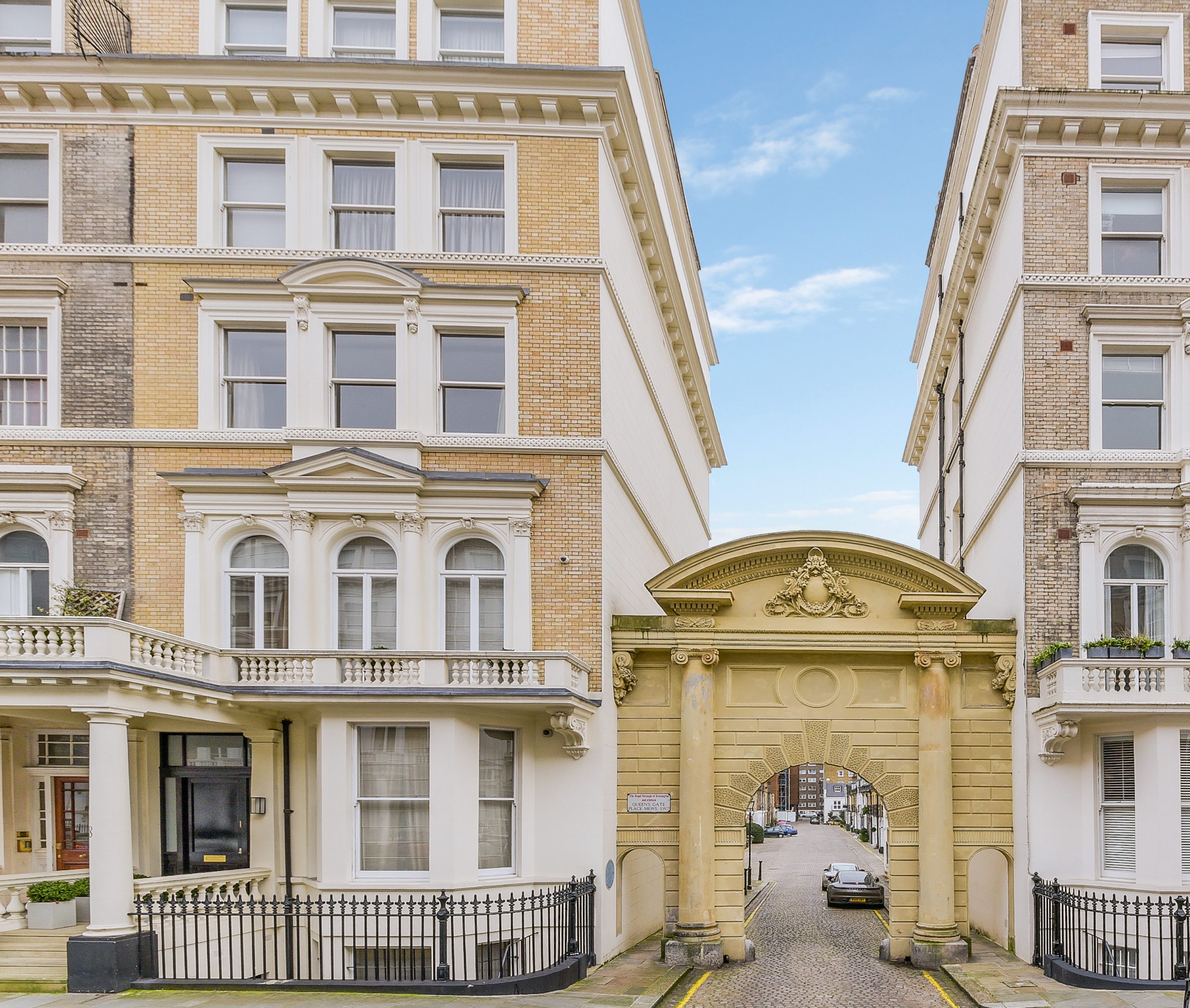
South Kensington is home to some of London’s best mews streets. There is practically a mews at every turn, and Queen’s Gate Place Mews is barely four minutes from two other attractive streets. If you are walking between them, you can exit Elvaston Mews at the north end onto Queen’s Gate Place, which connects with Petersham Mews. If you cross over into Gore Street and turn onto Queen’s Gate Terrace, you can access Queen’s Gate Mews.
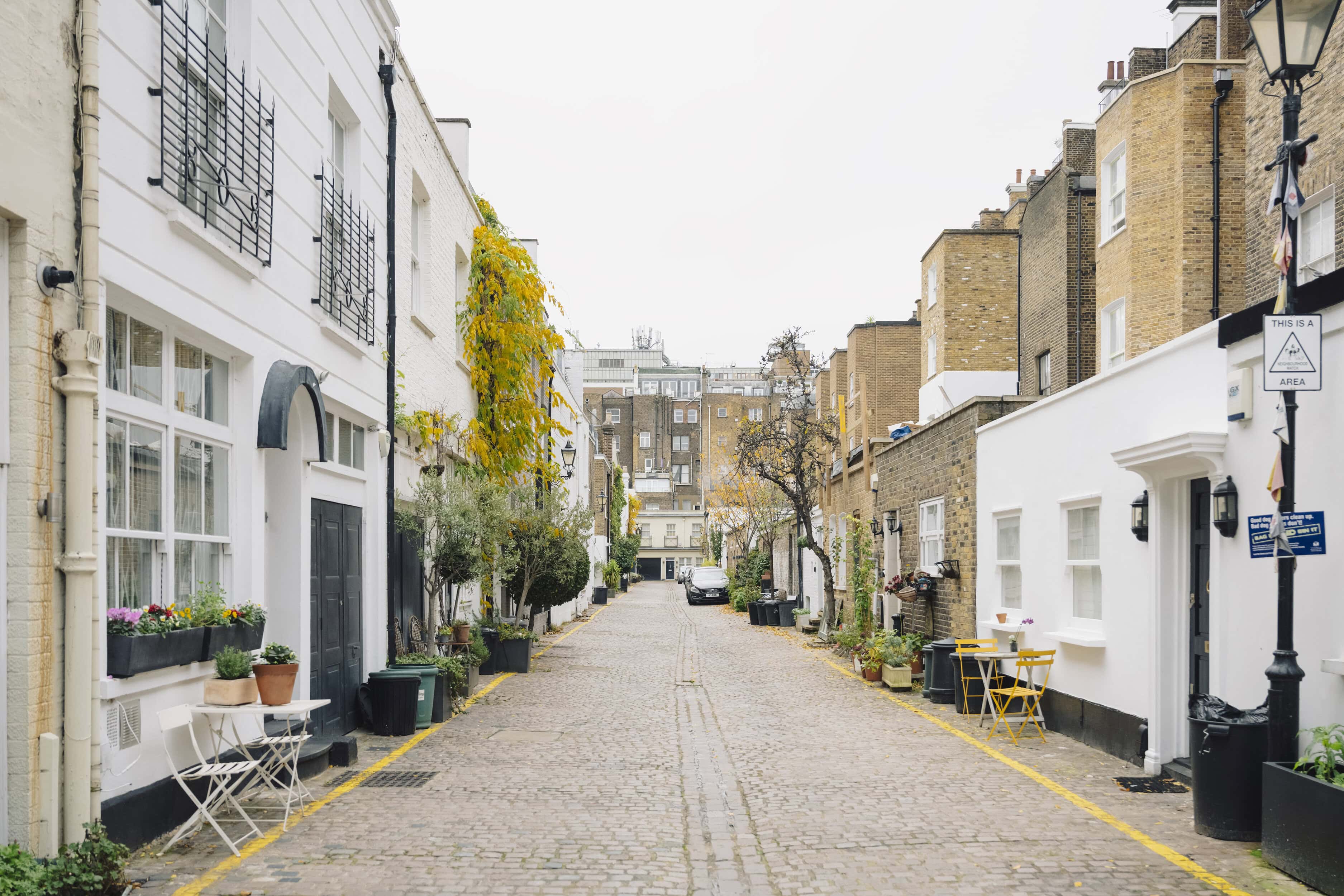
Queen’s Gate Mews, SW7
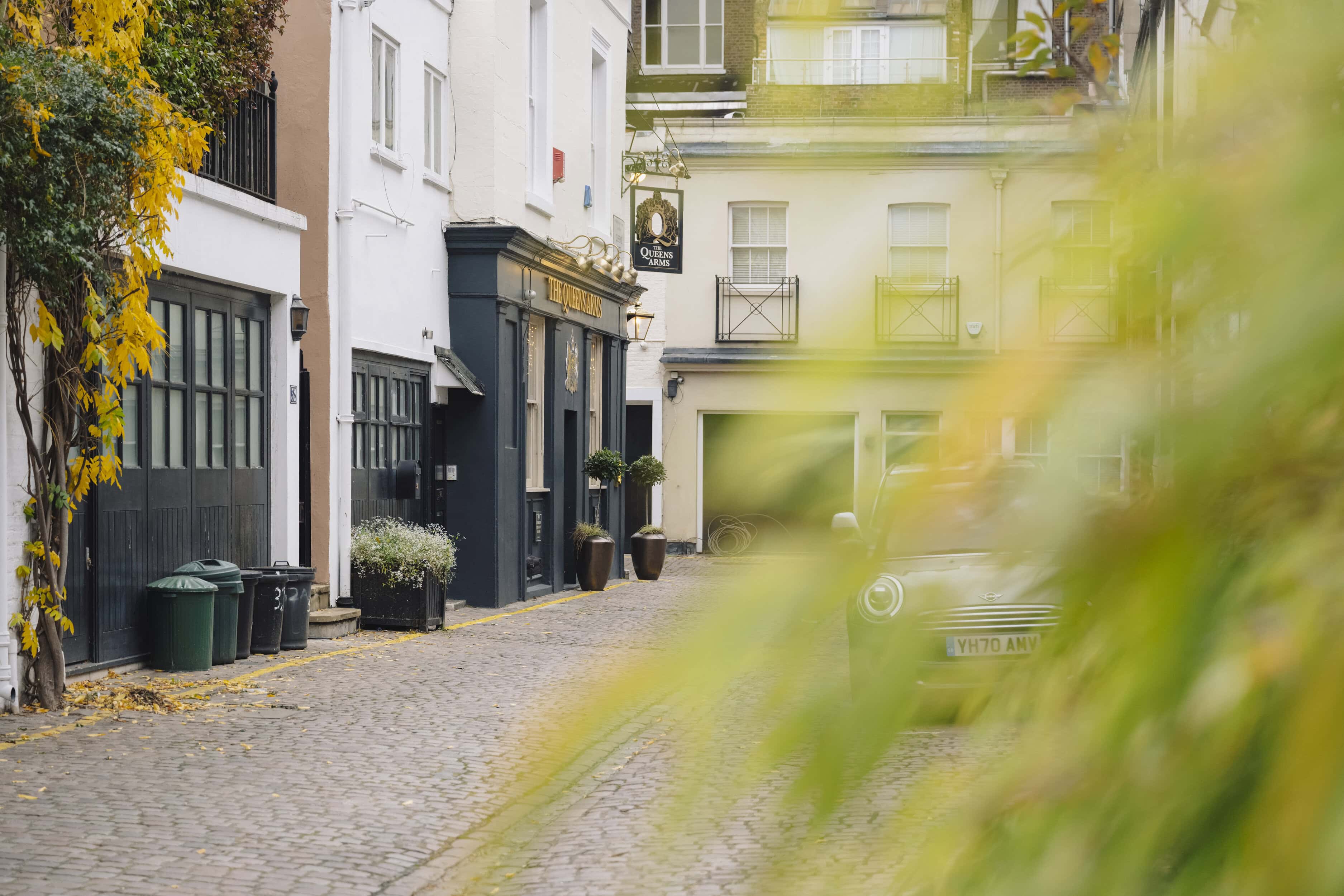
Queen’s Gate Mews is a leafy mews that retains its original Victorian streetlamps, wrought-iron balconies and steeped in period charm, and was once home to pop royalty Madonna and her former husband, film director Guy Ritchie, back in 1999, where they lived for several years before relocating to a larger property. It’s no surprise that Ritchie chose the mews street to shoot part of his film Layer Cake (2004).
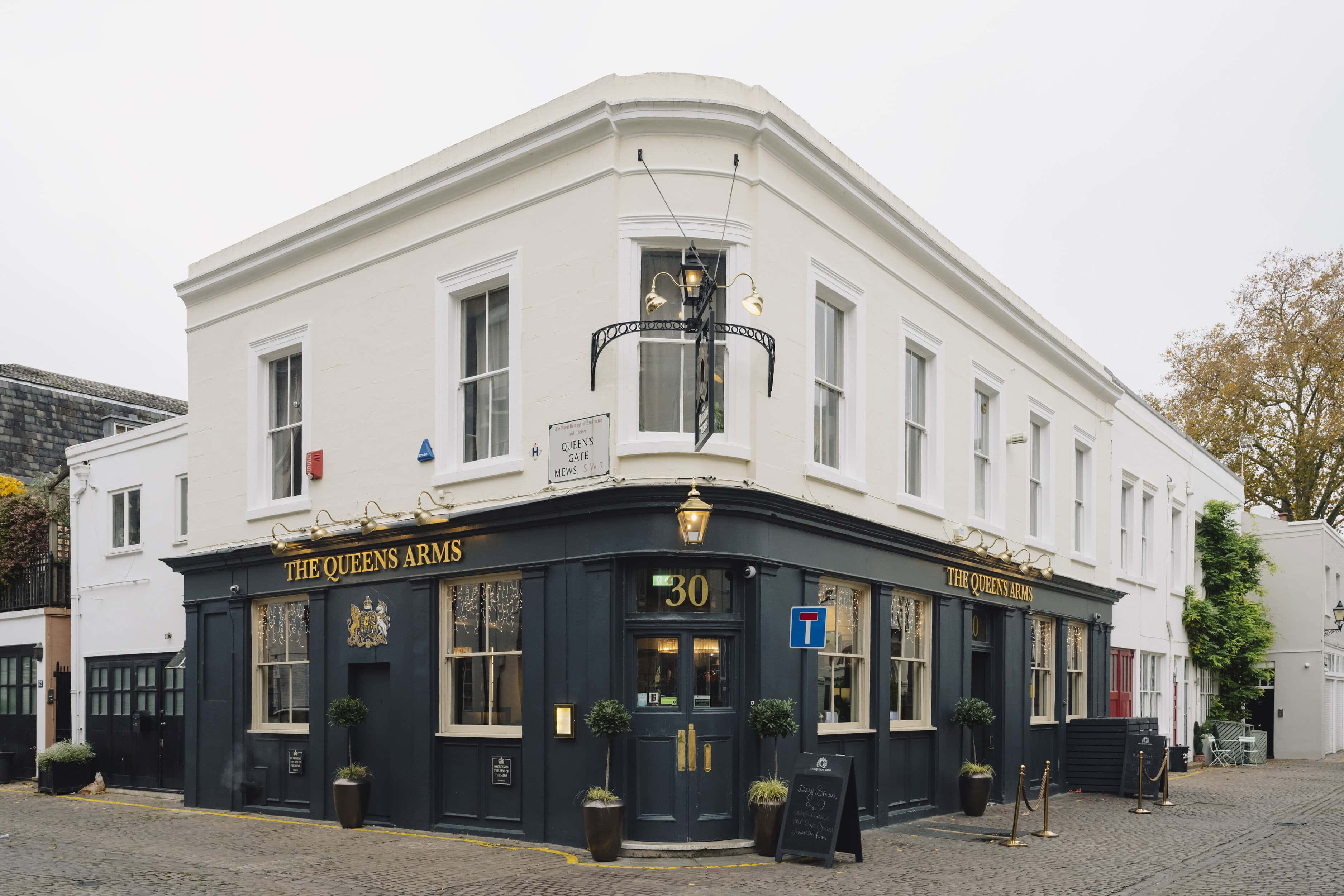
The celebrity pair were known to also enjoy a quiet drink at their local pub, The Queen’s Arms, which can be found on the corner of this sought-after mews. The traditional London pub is a much-loved gathering place for mews residents and locals; a great place to pop into for a bite and refuel when exploring London’s mews on foot.
Petersham Mews, SW7
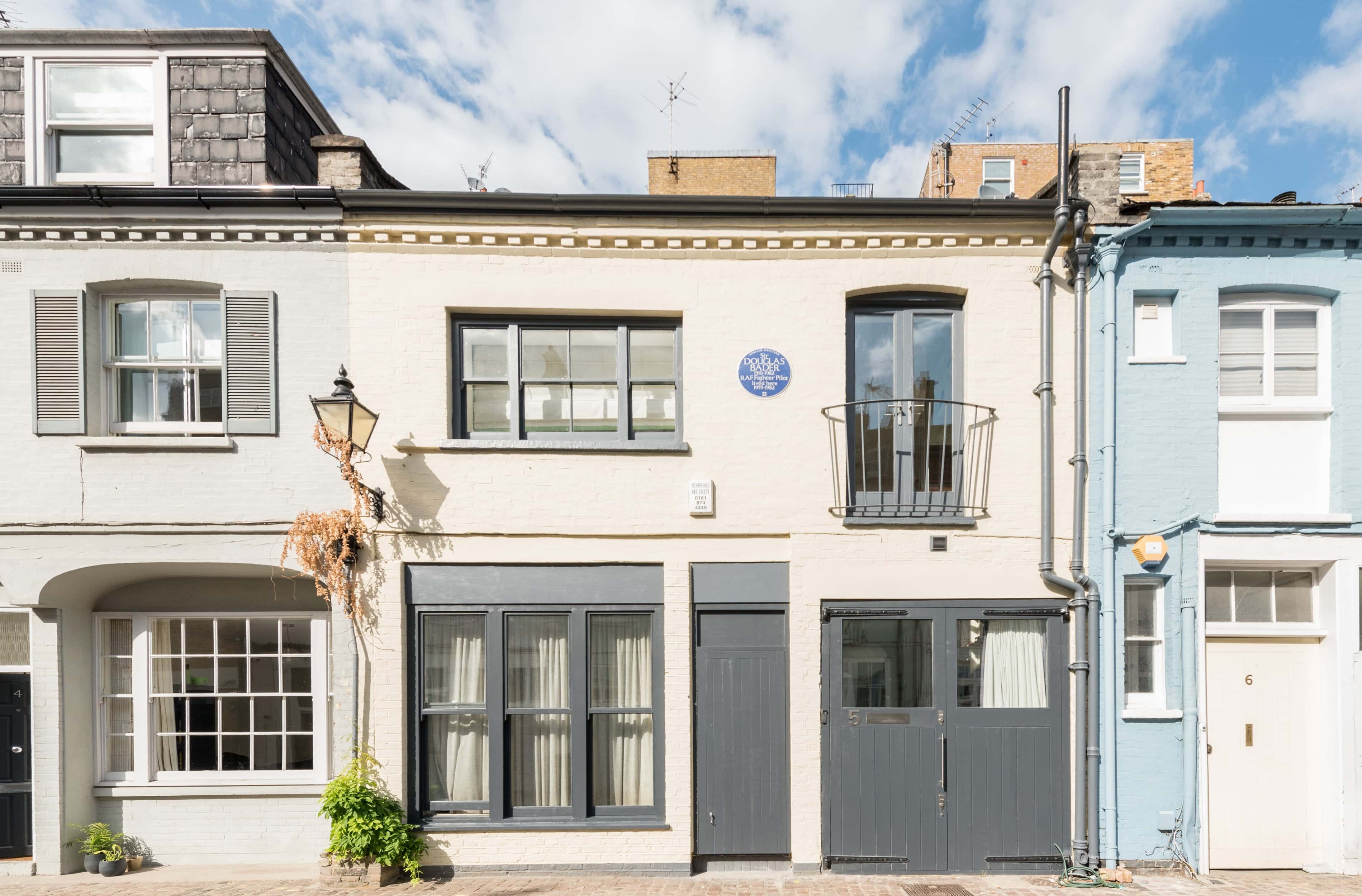
Petersham Mews lies just north of Elvaston Place, and is another enticing mews with rows of delicately painted houses and once home to an important historic figure. The highly decorated RAF fighter pilot Douglas Bader lived at number 5 for almost 30 years (from 1955 until his death in 1982). English Heritage commemorated Bader with a blue plaque in 1982, that was unveiled by Sir Richard Branson, who is a life-long admirer of Bader’s courageous spirit and determination. Bear in mind, there are plenty more blue plaques to discover in mews across Prime Central London.
Elvaston Mews, SW7
Elvaston Mews originally provided stable and coach accommodation for the large wealthy households on Elvaston Place and Queen’s Gate Place.
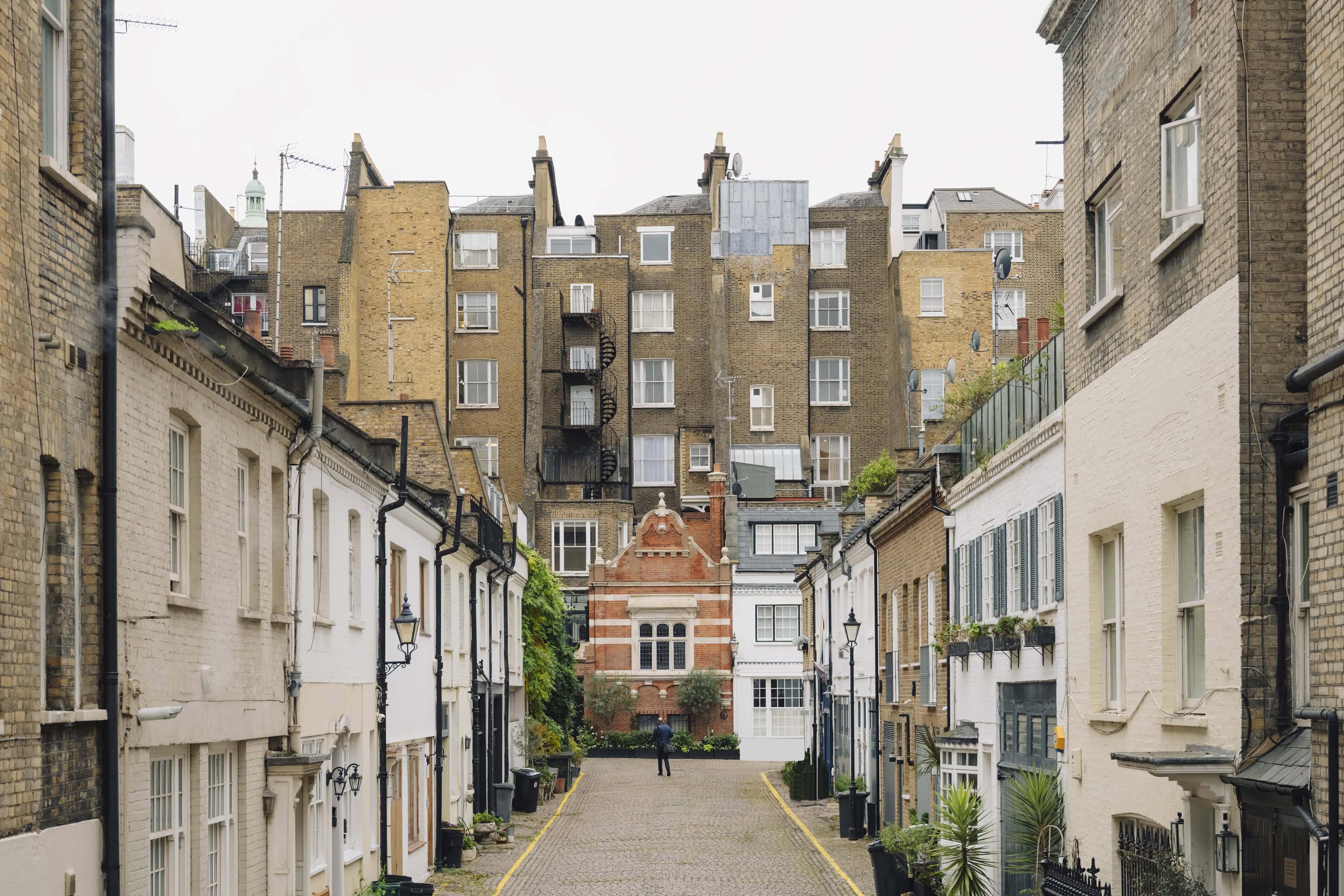
During World War II, a highly explosive bomb directly hit this mews (as was the case for many other London mews), but miraculously many of the original houses survived. Elvaston Mews was the penultimate mews to have a working stable, which sadly closed after 170 years to be redeveloped into a private residence. The only remaining working stables are located in Bathurst Mews, W2 and the Royal Mews.
Ennismore Gardens Mews, SW7
While in the vicinity, why not visit nearby Ennismore Gardens Mews, an interesting L-shaped mews approached through its own arch, and situated behind the Holy Trinity Church in Brompton and the Victoria & Albert Museum. The residential houses showcase some wonderful preserved architectural mews features, including a consistent, unbroken parapet line, and again, some houses are attractively painted, while others retain their original brickwork with several garages intact. At the very start of the mews, you’ll also notice something quite unusual: an extremely narrow house, often described as one of the slimmest in London and easy to miss unless you’re looking closely.
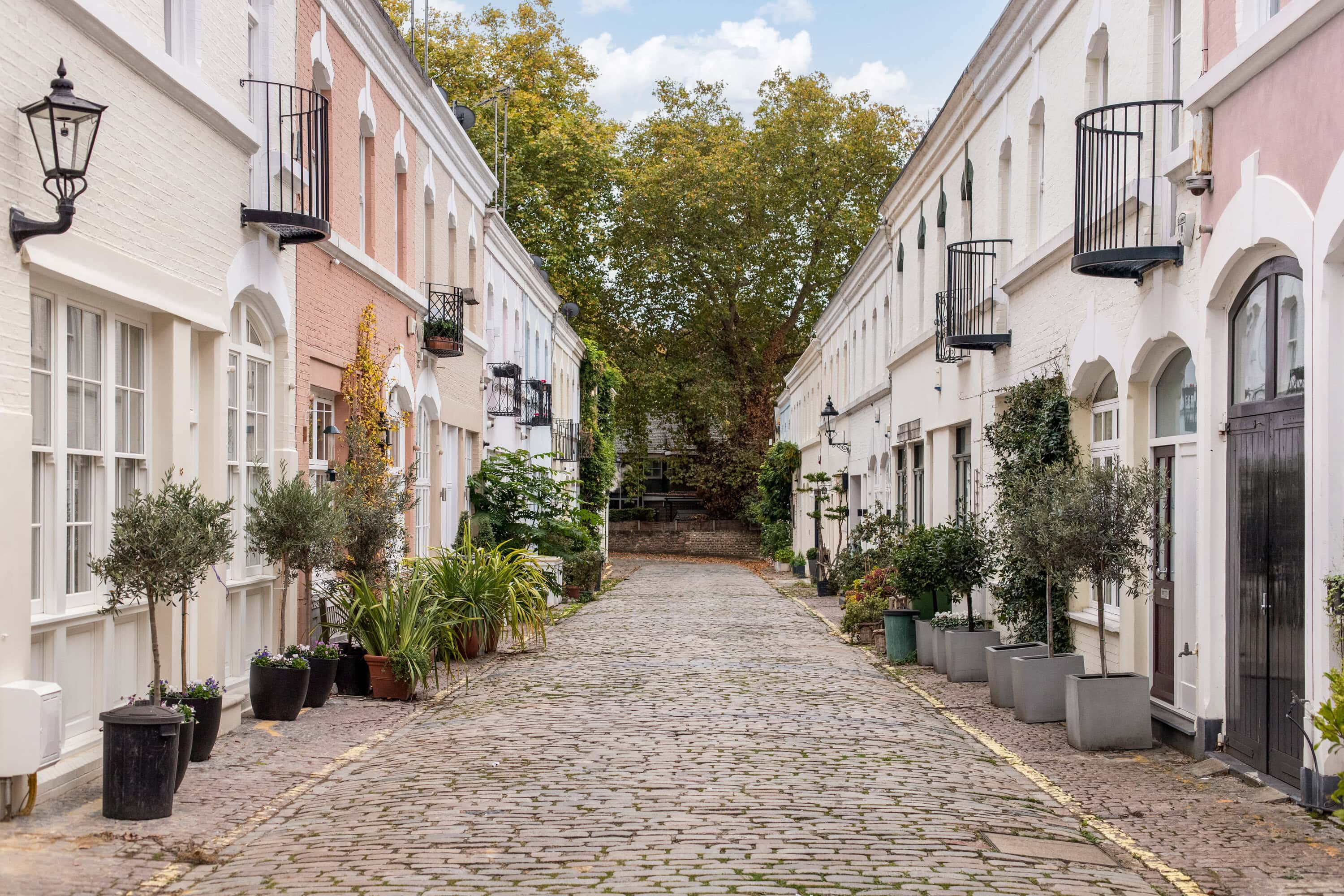
This mews was where the 1987 iconic Volkswagen advertisement was directed by the famous photographer David Bailey. ‘If only everything in life was as reliable as a Volkswagen’, was the tagline and the ad featured model Paula Hamilton throwing away her fur coat and pearls but choosing to keep the keys to her VW Golf.
Kynance Mews, SW7
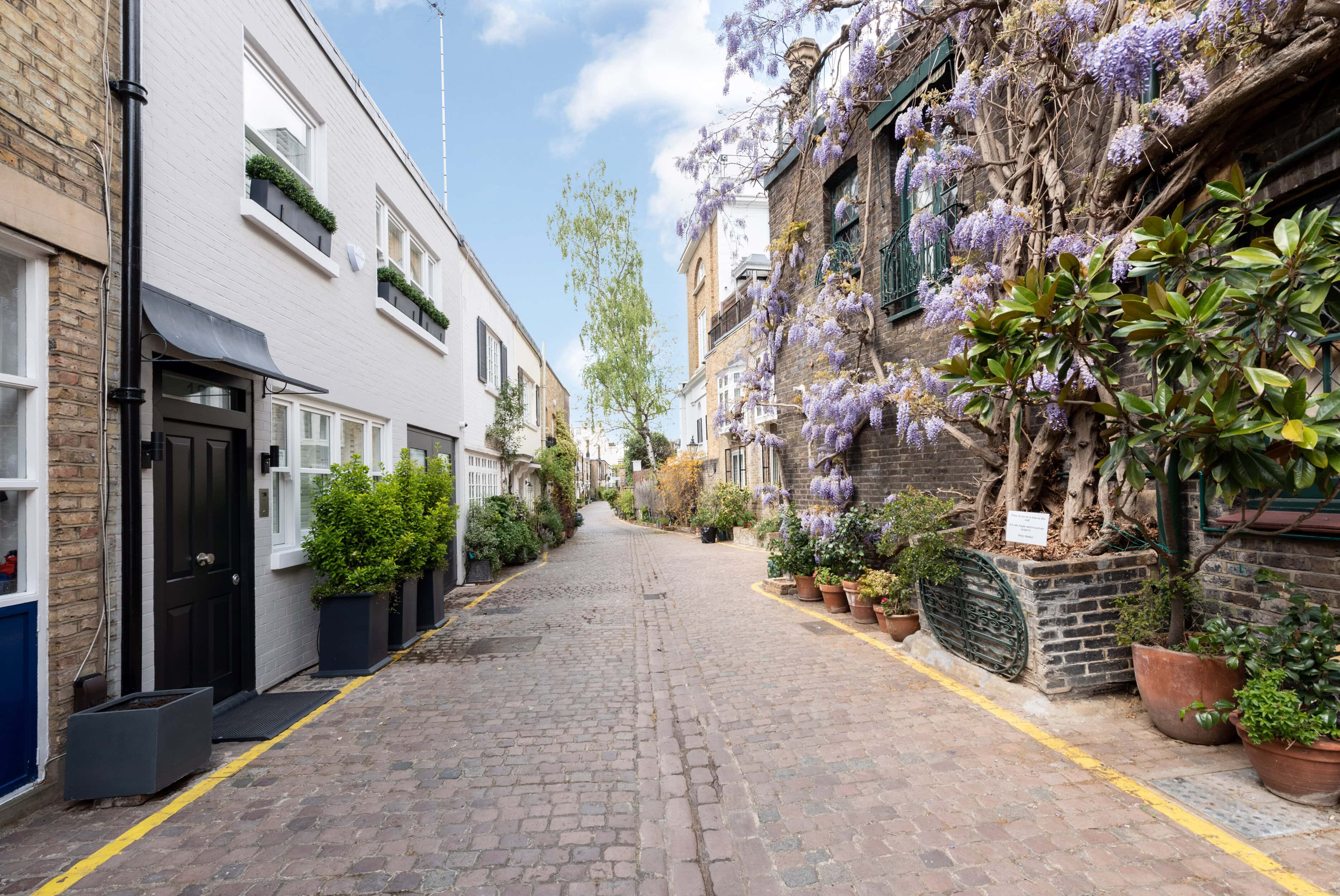
A wander around some of London’s best mews streets wouldn’t be complete without a stop-off at Kynance Mews in South Kensington. Like so many other mews streets, it’s also featured in the Netflix drama You and the 1992 film Damage. Often referred to as ‘Insta-famous’, it’s one of the most photographed mews in the whole of London.
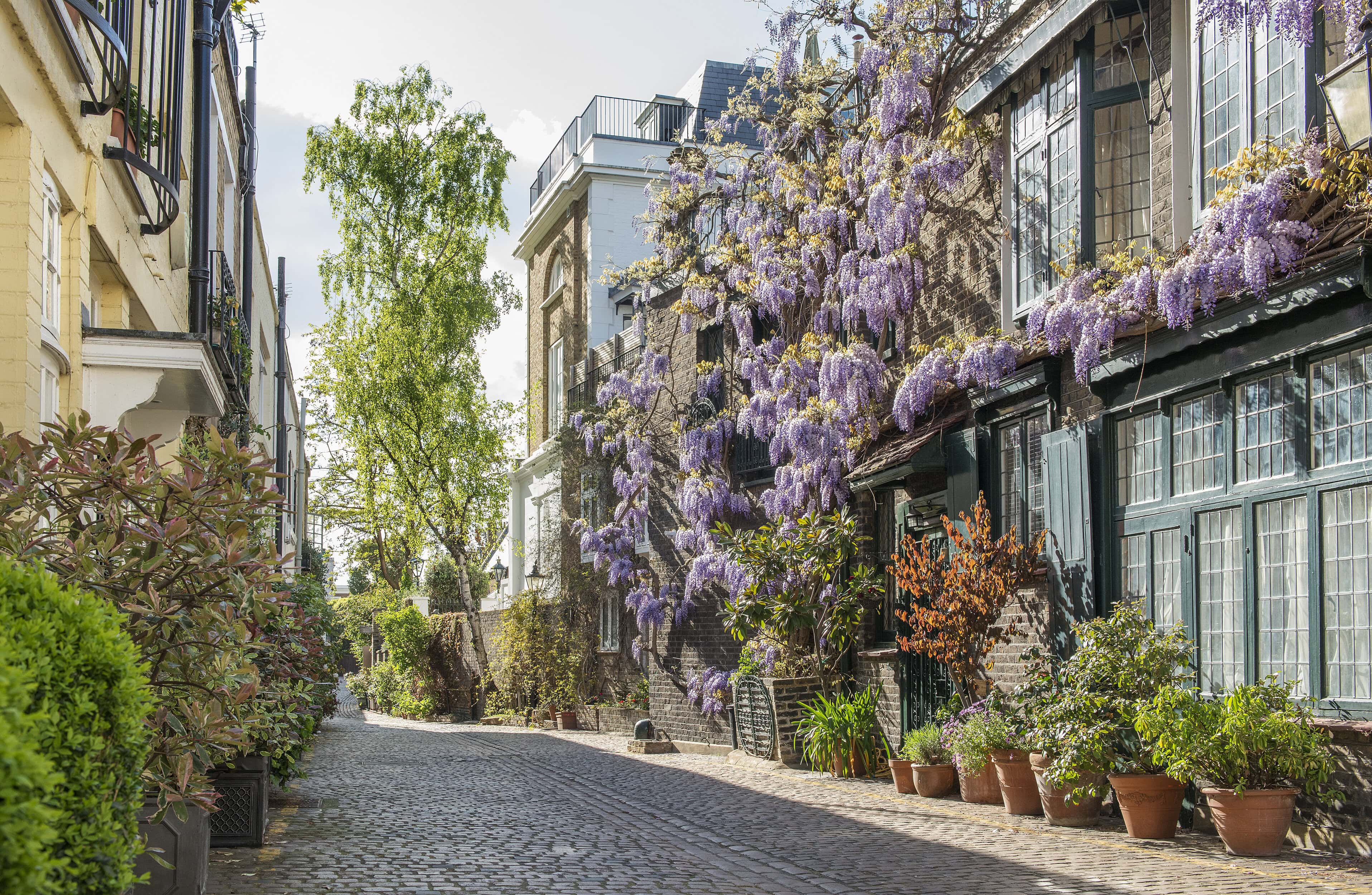
Renowned for its verdant wisteria fronds in spring and Virginia creeper clad stone archways in autumn, the mews is romantically picturesque during very season and originally housed the stables and coach houses for the residents in Cornwall Gardens.
Mews streets in Notting Hill
Back in the 60s and 70s mews were considered rather ‘tawdry’ places used as workshops, lock-ups, storage and garages. Back then, no one would have dreamed of turning them into the luxury homes that today are considered some of central London’s most prime real estate.
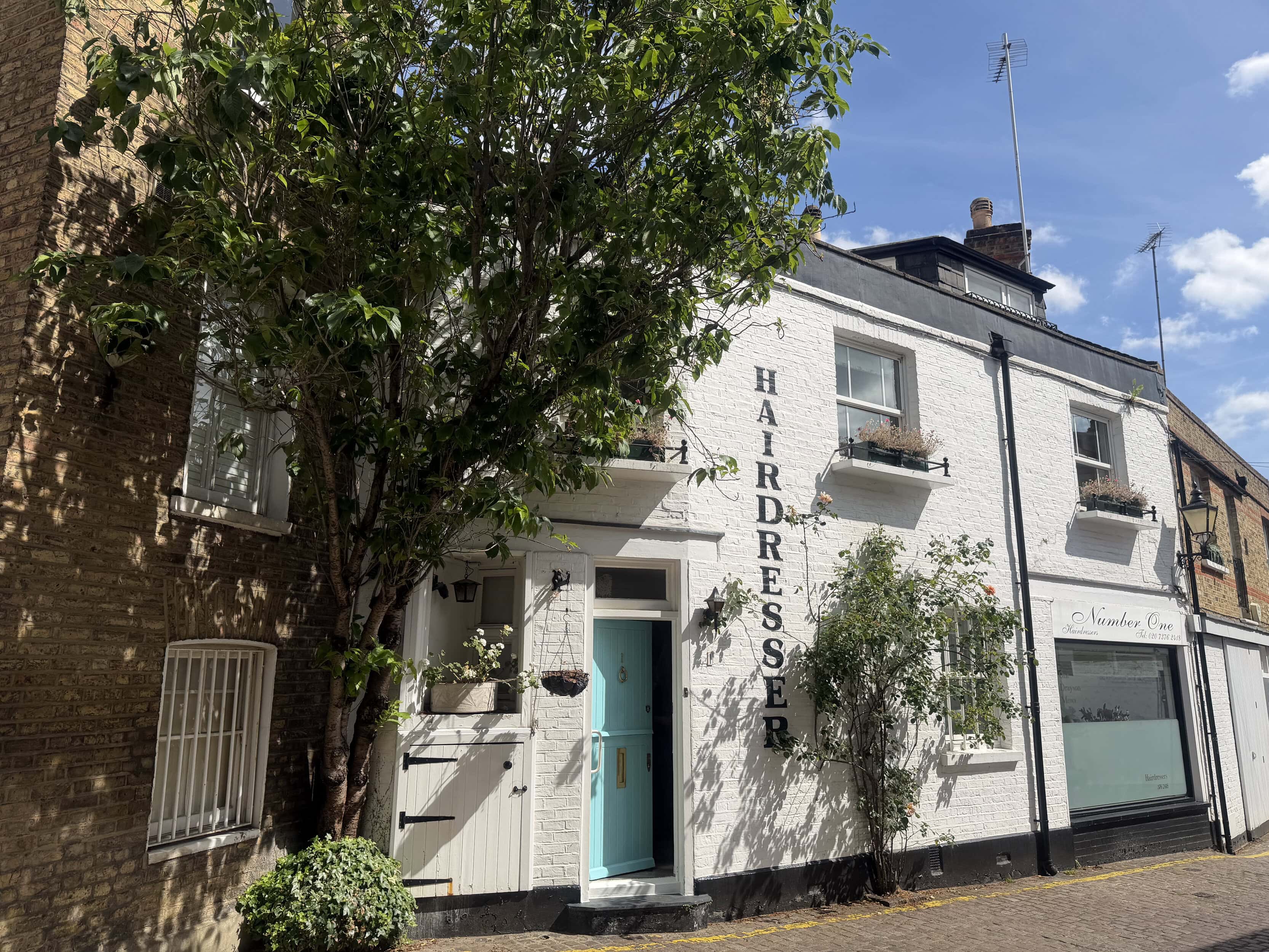
Drayson Mews, W8
Moving on from Kensington High Street, meander through the residential backstreets heading across to Notting Hill, which will lead you to Drayson Mews, W8, a pretty, cobbled through road offering a mix of residential and commercial properties. This particular mews includes Number One, a unisex hairdresser; Sprint, a complementary medicine practice; an art gallery; and a garage repair workshop. The mix of private homes interspersed with local businesses is a reflection of the way mews have evolved.
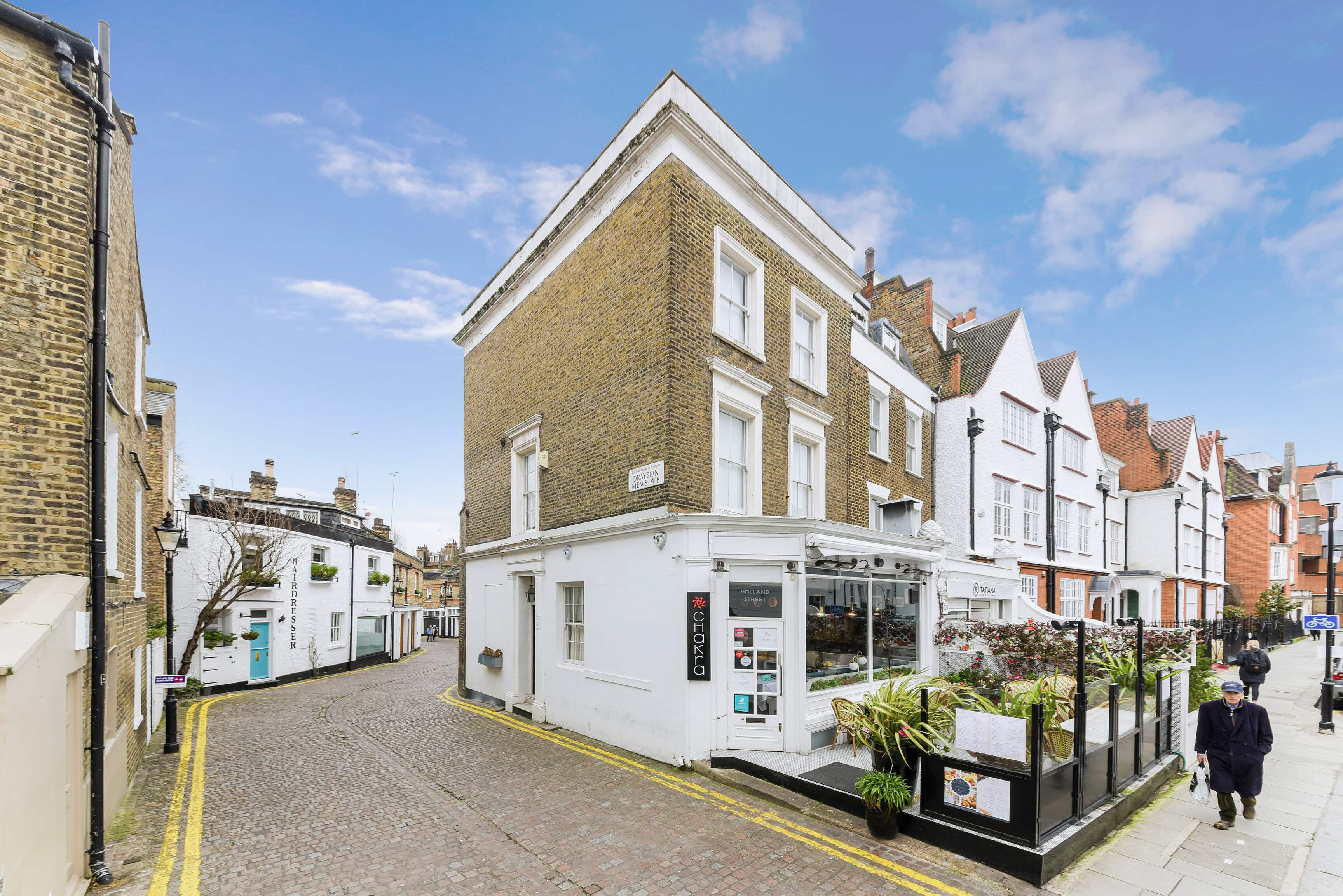
Colville Mews, W11
Colville Mews is quiet and colourful, located in the heart of Notting Hill. It’s perfectly situated near to many popular restaurants, which you can find on Portobello Road, Ledbury Street and Westbourne Grove, and was previously home to the Temperley Bridal boutique, whose exterior was painted in Union Jack colours.
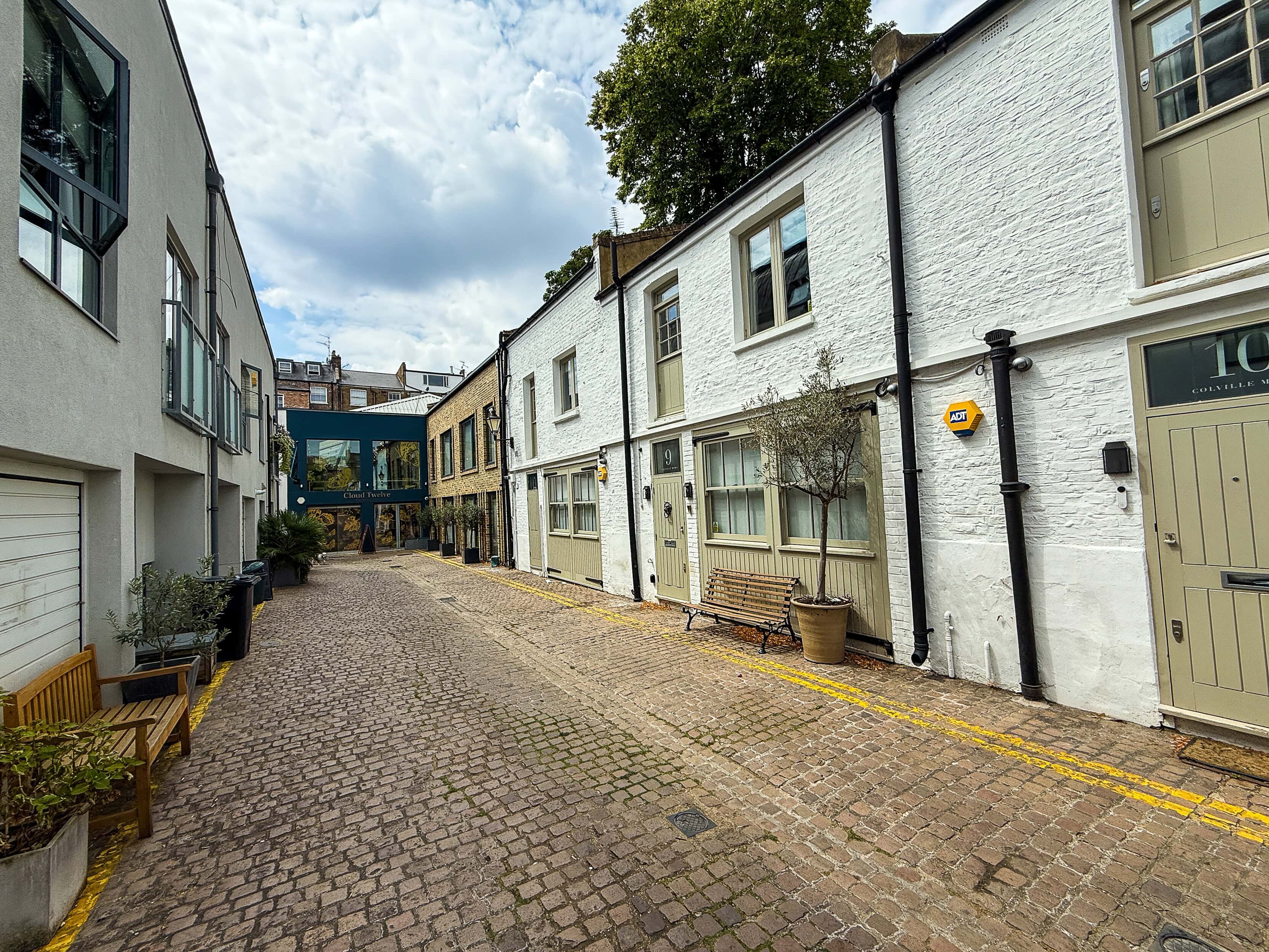
Horbury Mews, W14
Just before crossing Notting Hill Gate, do go and admire Horbury Mews, W14. The street offers gorgeous honey-coloured Victorian brick mews houses arranged over the cobbles, painted in muted shades and displaying perfect topiary and inspired planting. Despite being only a few metres from the vibrant busy streets of Notting Hill, this mews is a blissfully calm haven.
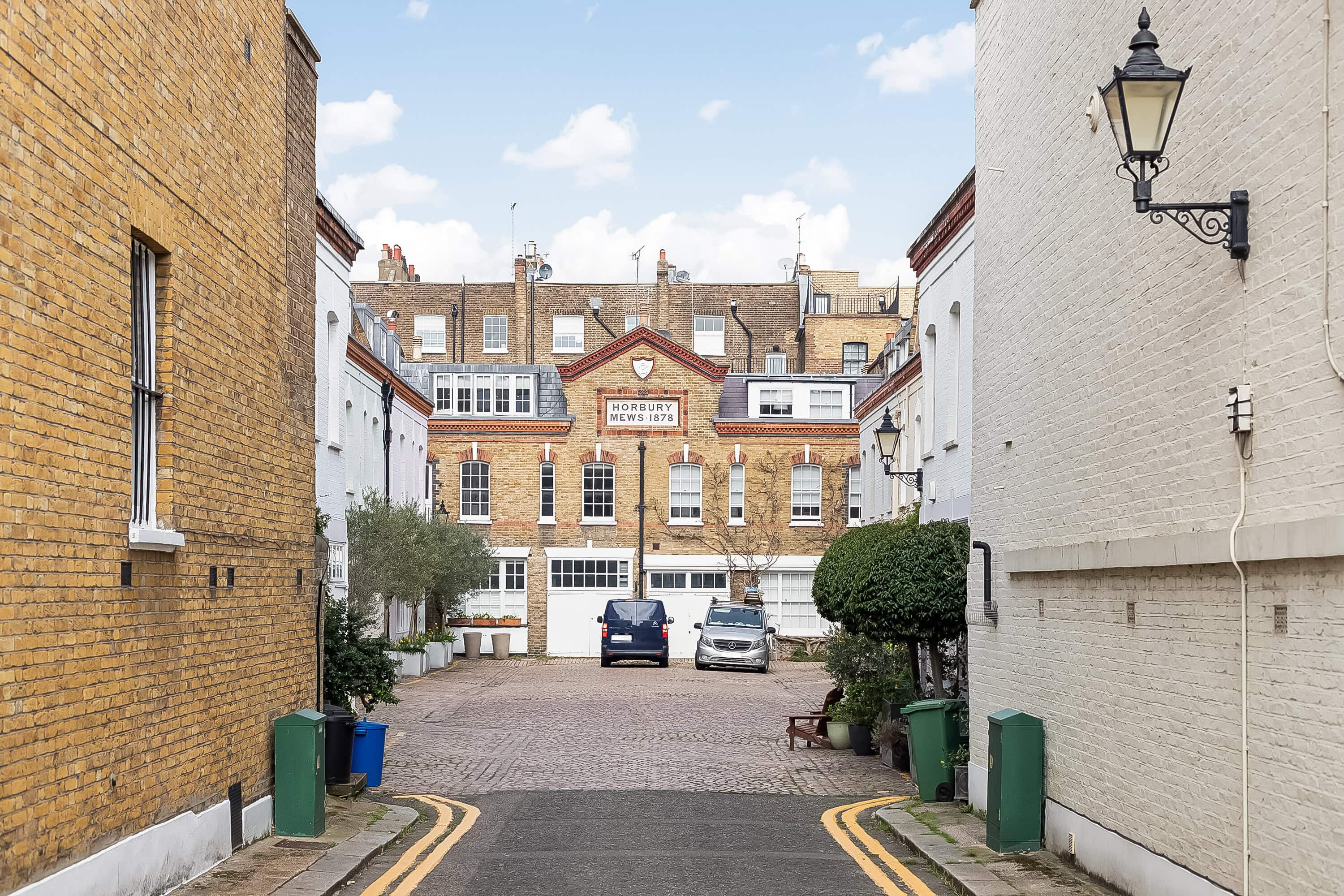
St Luke’s Mews, W11
Located off and around Portobello Road are some of the neighbourhood’s most desirable and classic mews. St Luke’s Mews, which is approximately a 10-minute walk from Westbourne Grove, is a regular stopping point for walkers, famous for its array of colourful and characterful houses, and for appearing in the 2003 film Love Actually, starring Keira Knightley.
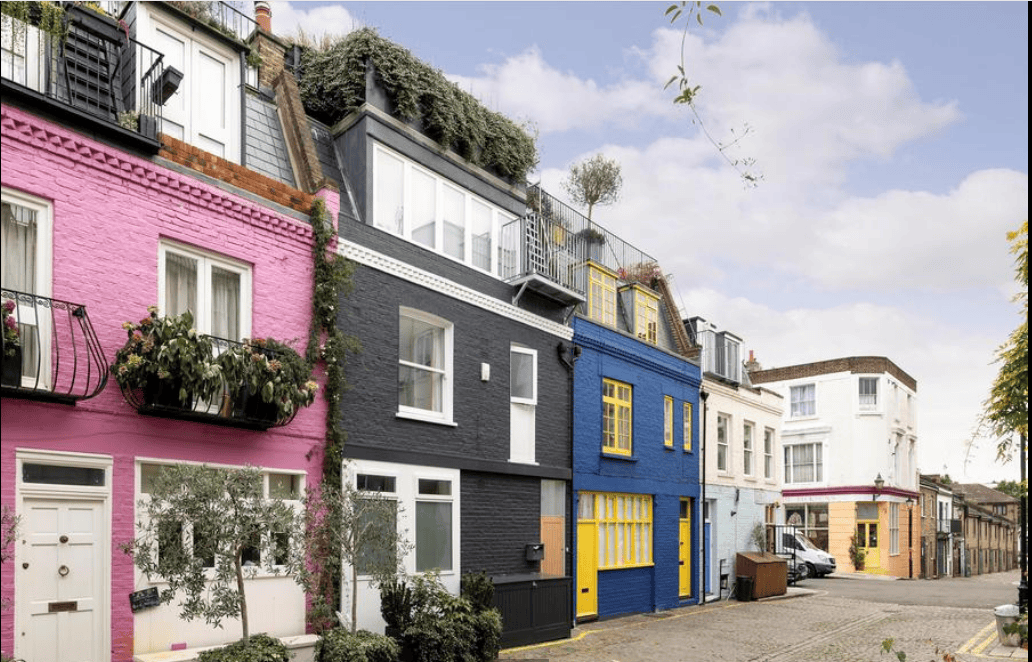
Pembridge Mews, W11
Pembridge Mews is a quiet cobbled cul-de-sac just off Pembridge Crescent, and it has that classic Notting Hill feel that makes this part of London so distinctive. The street is lined with pretty, cottage-style mews houses painted in a mix of soft and vibrant colours, giving it a relaxed but very photogenic character. Although it feels tucked away, it’s only a short walk to the heart of Notting Hill, where you’ll find independent boutiques, cafés, and restaurants, and it’s also close to Notting Hill Gate Underground Station for easy travel across the city. From here, you can quickly reach some of London’s most beautiful green spaces, including Kensington Gardens and Hyde Park, both perfect for a peaceful stroll, while just nearby are some of the area’s most famous streets such as Blenheim Crescent, the flower-filled houses of Lancaster Road, and the iconic St Luke’s Mews, all of which add to the neighbourhood’s well-known charm and its association with the film Notting Hill.
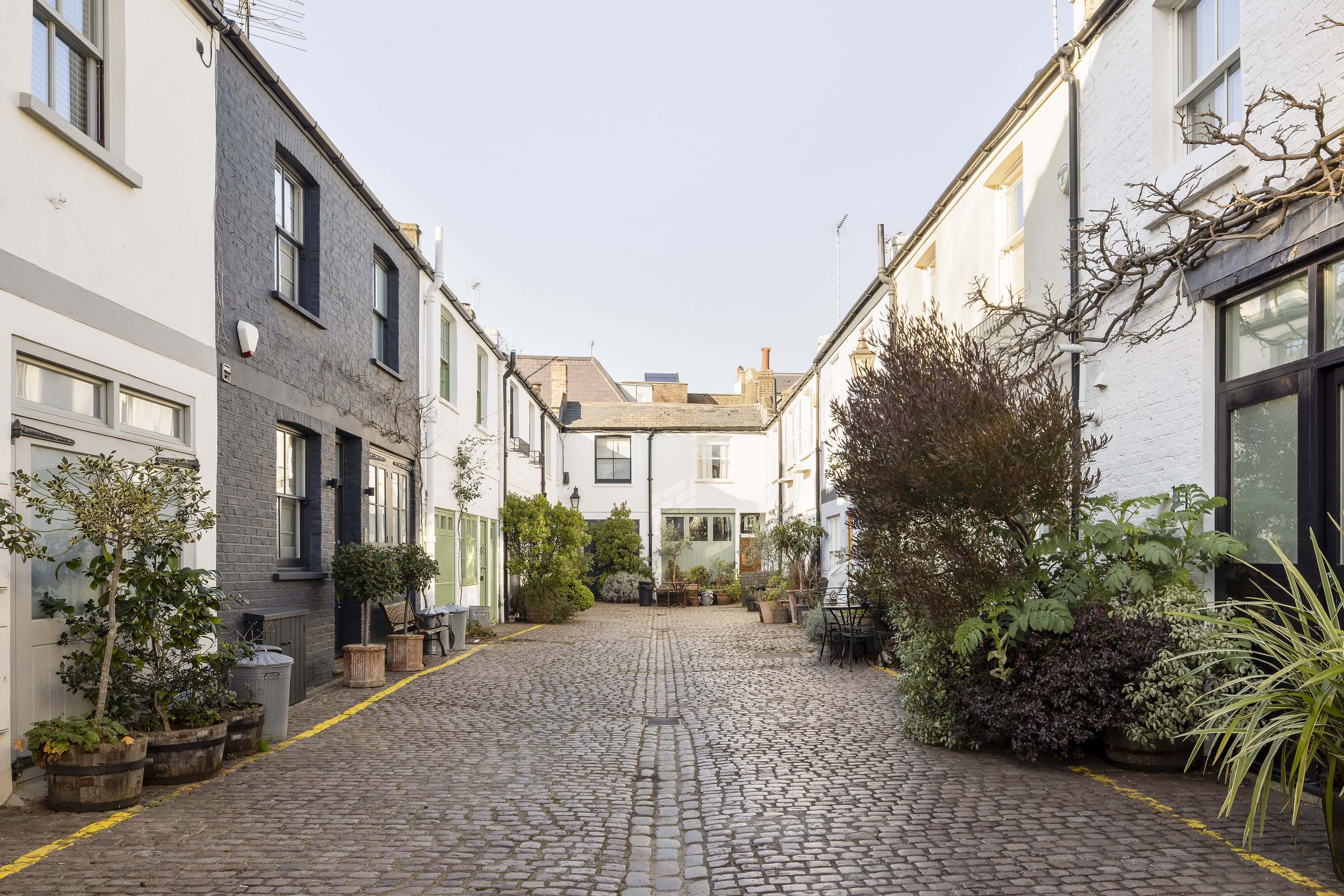
Codrington Mews, W11
No mews walk around Notting Hill should miss out on visiting Codrington Mews, W11 situated between Portobello Road and Ladbroke Grove, where a short way along you can check out the actual bookshop from the 1999 film Notting Hill.
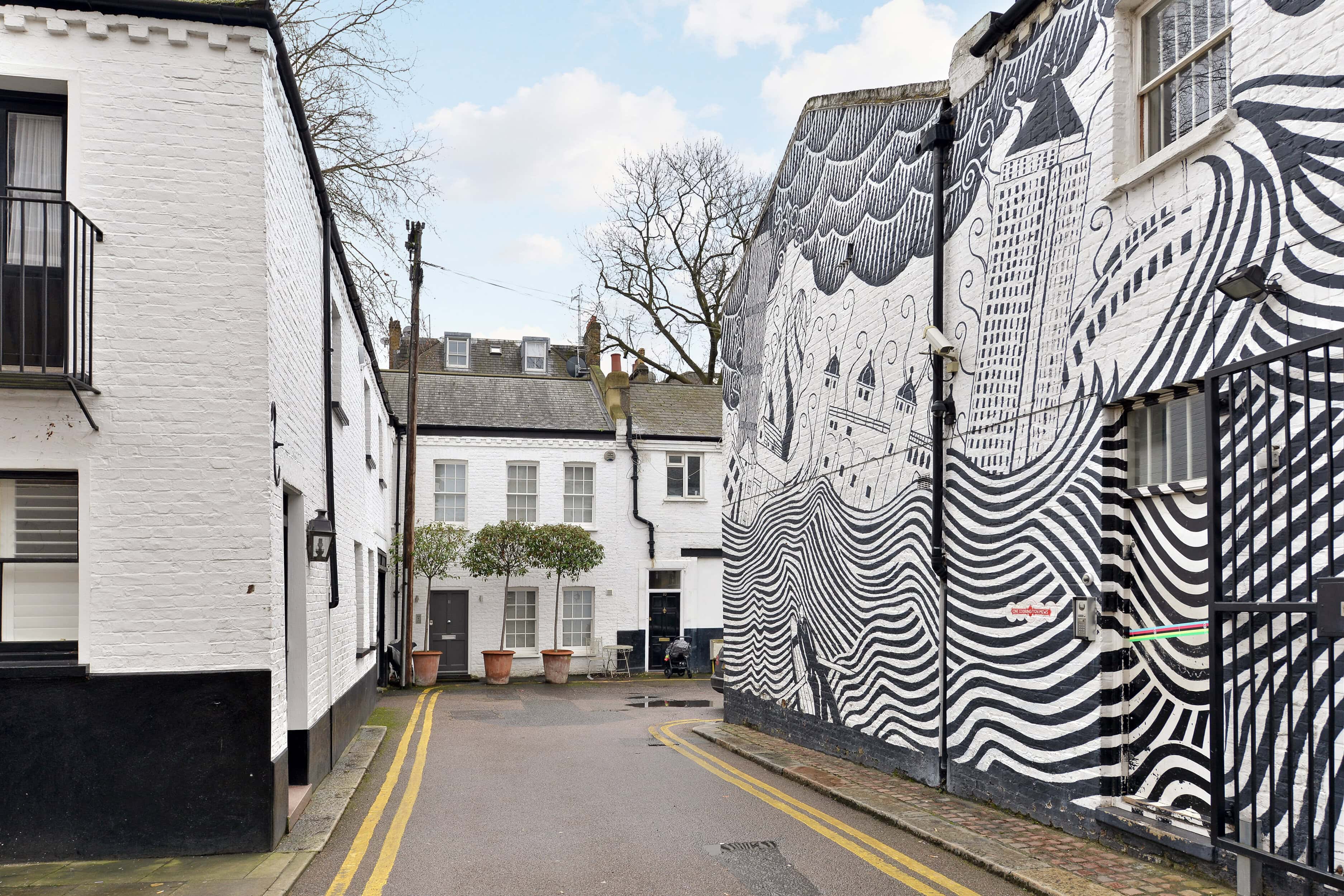
Impossible to ignore is the end wall of the building that has been imaginatively decorated with artwork from the label’s albums; it displays the indie pop band The XX’s album cover from Coexist on the left, and artwork from the solo album The Eraser by Radiohead’s Thom Yorke.
London’s best mews streets
Walk down a mews today and you will find all manner of intriguing things – converted mews galleries and studios used by artists, record producers and Pilates teachers; you will stumble across classic car showrooms, ateliers, wedding boutiques, florists, and jewellery makers.
Most of all, you will get a chance to glimpse into a private world that is home to some of the most genuine active communities across London. There’s no forgetting that the mews are as much about the people who live there as the bricks and mortar. The care and love that envelops these houses hidden in their little enclaves is a testimony to how much mews residents believe that there really is no place like a mews home.
